How It Shows Up
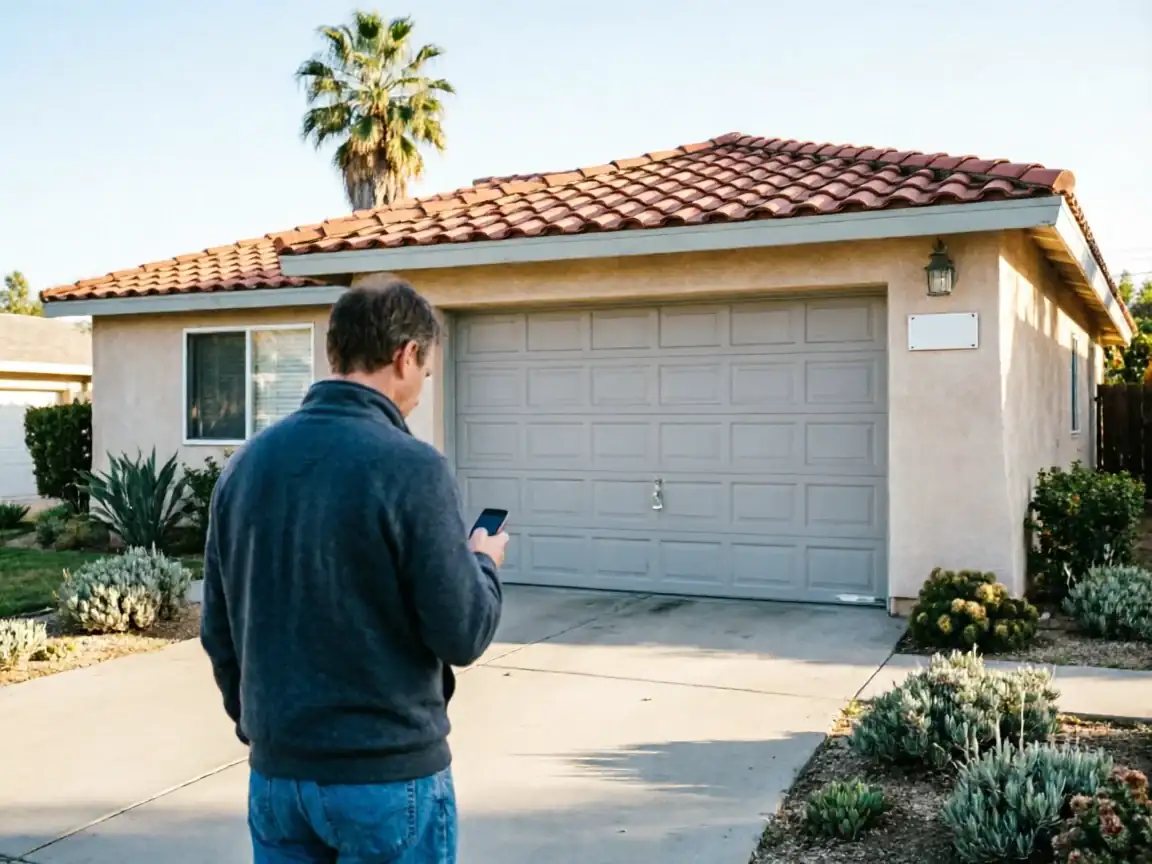
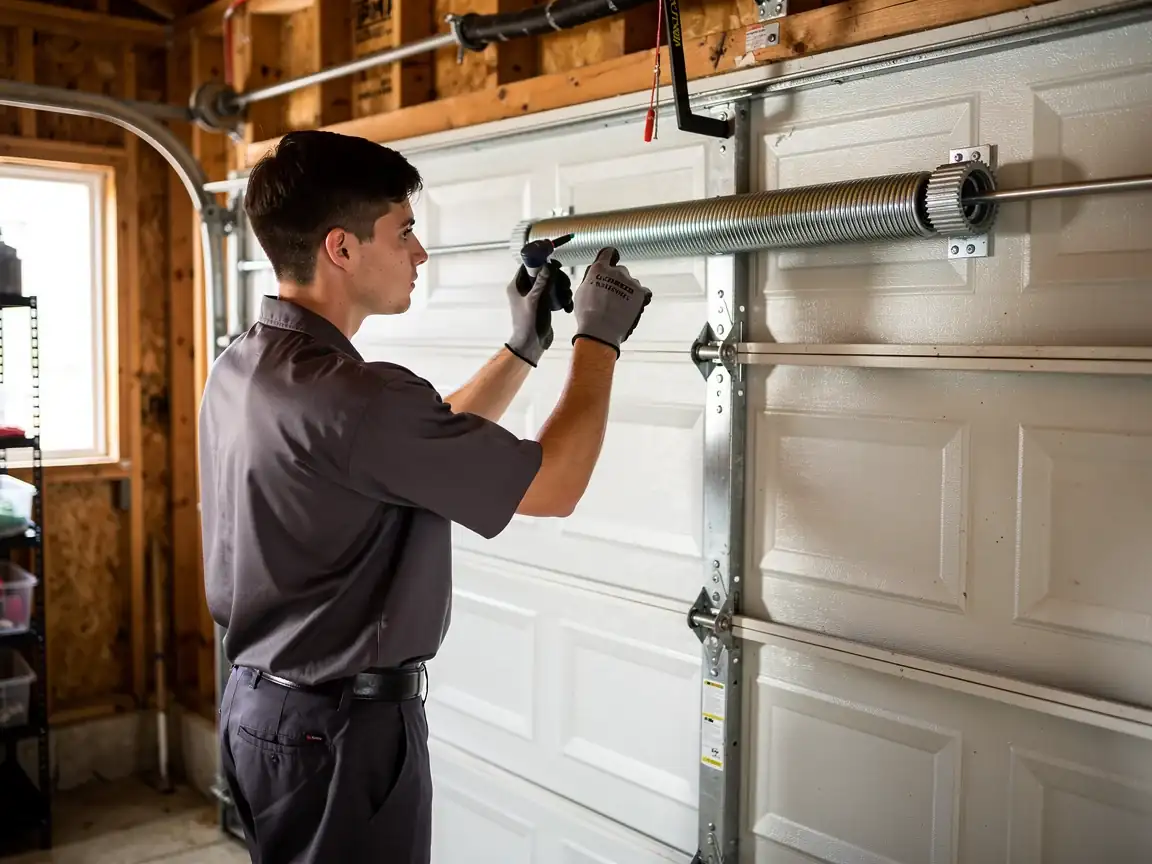
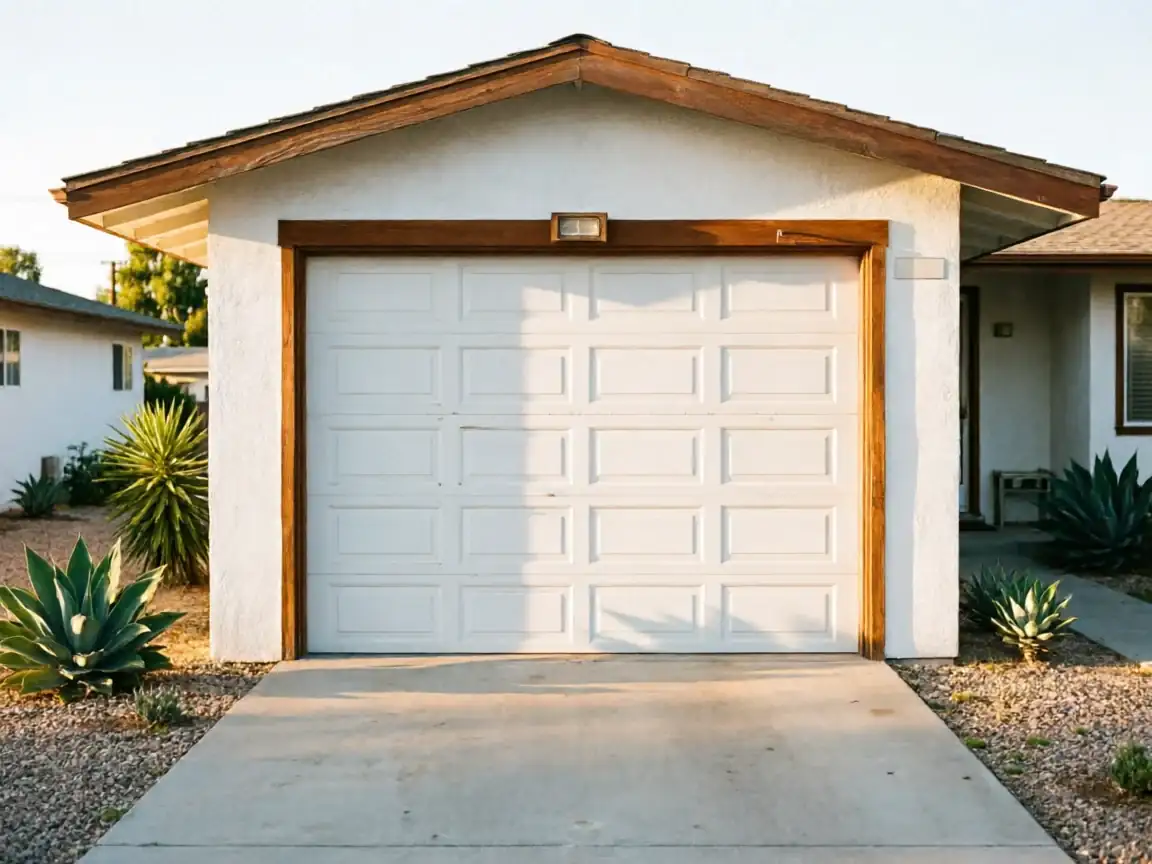
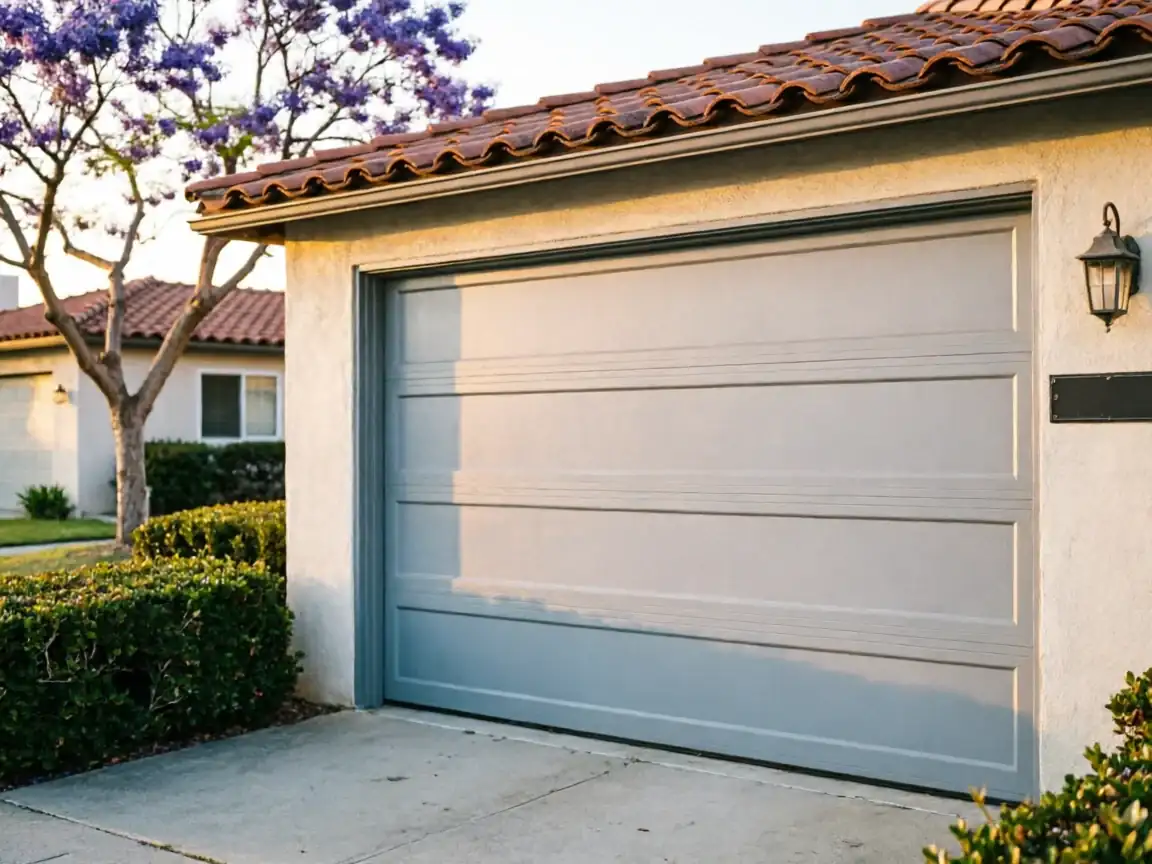
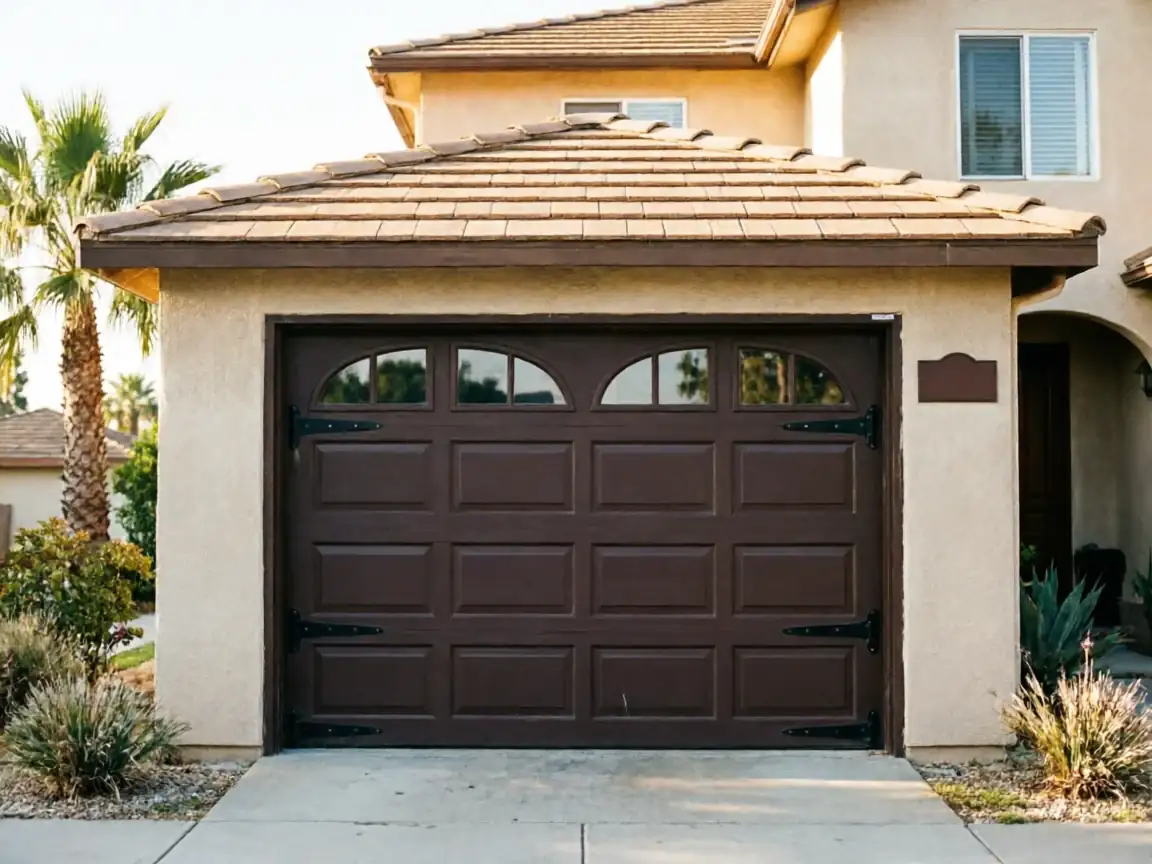
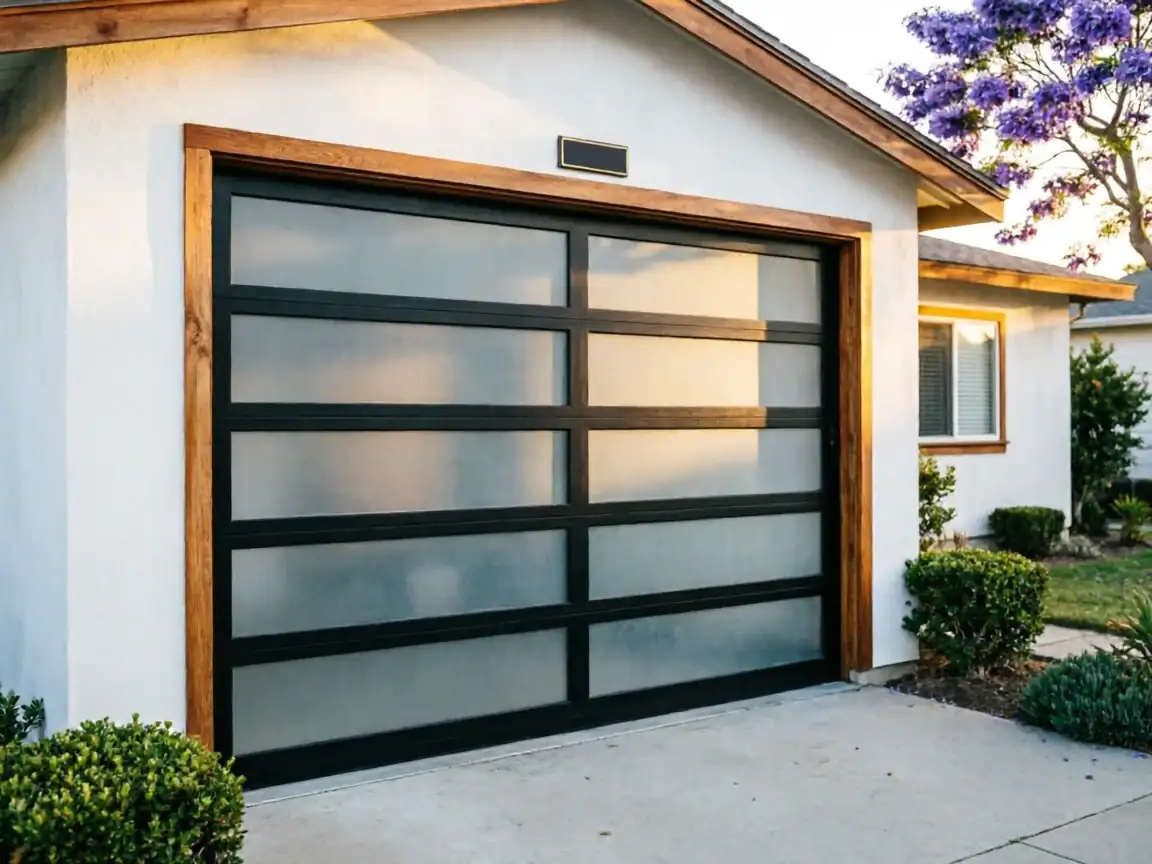
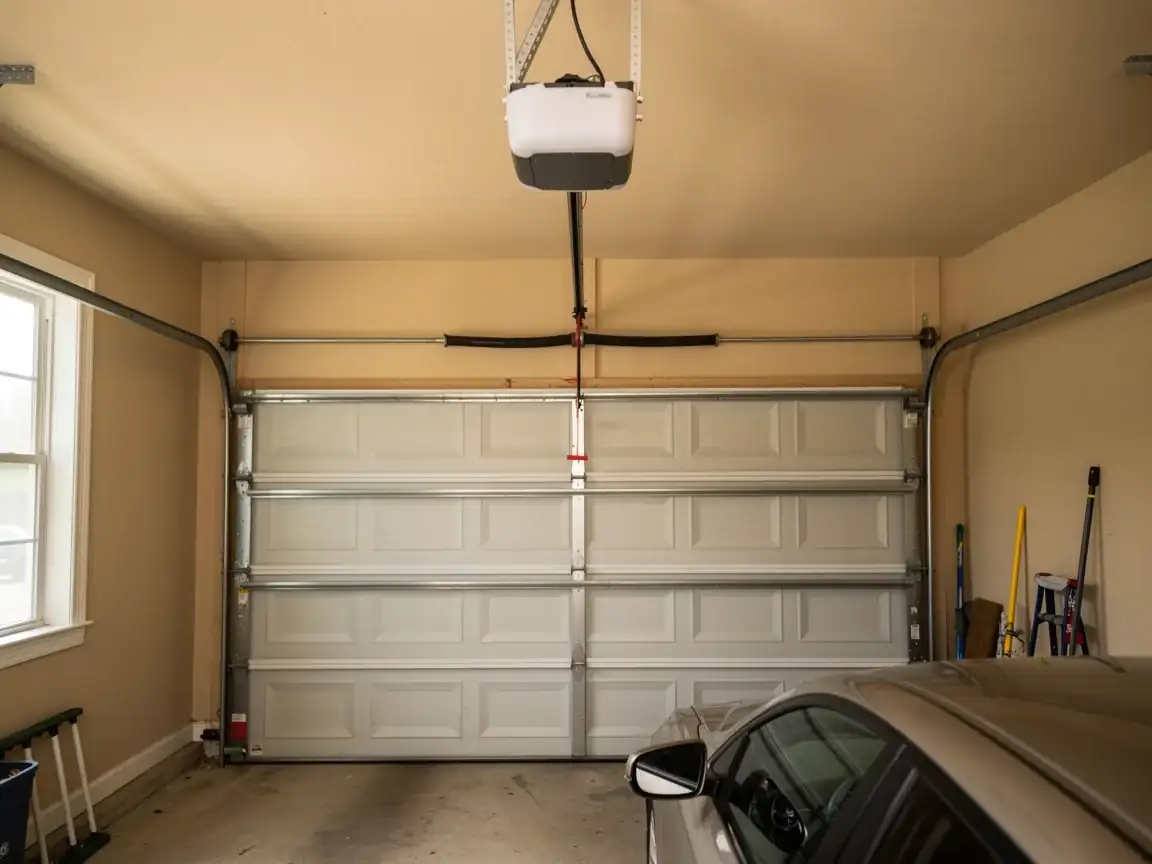
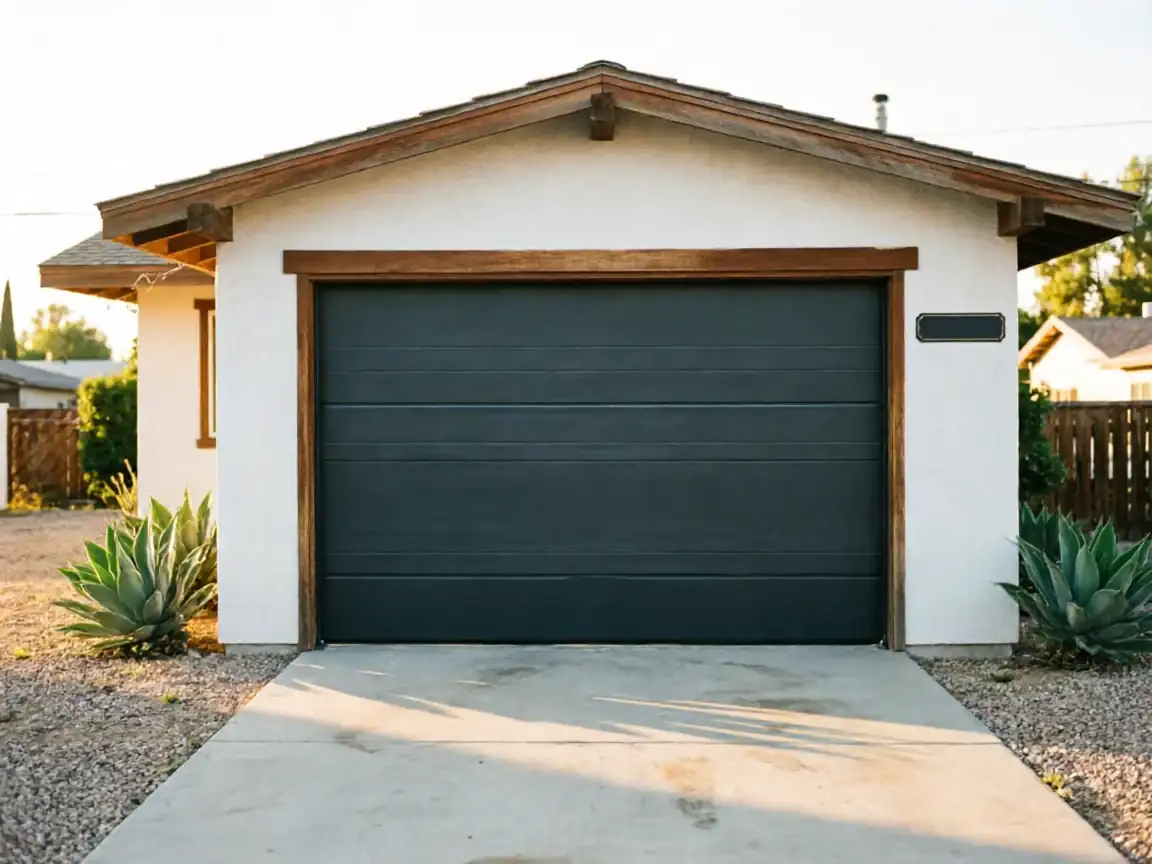
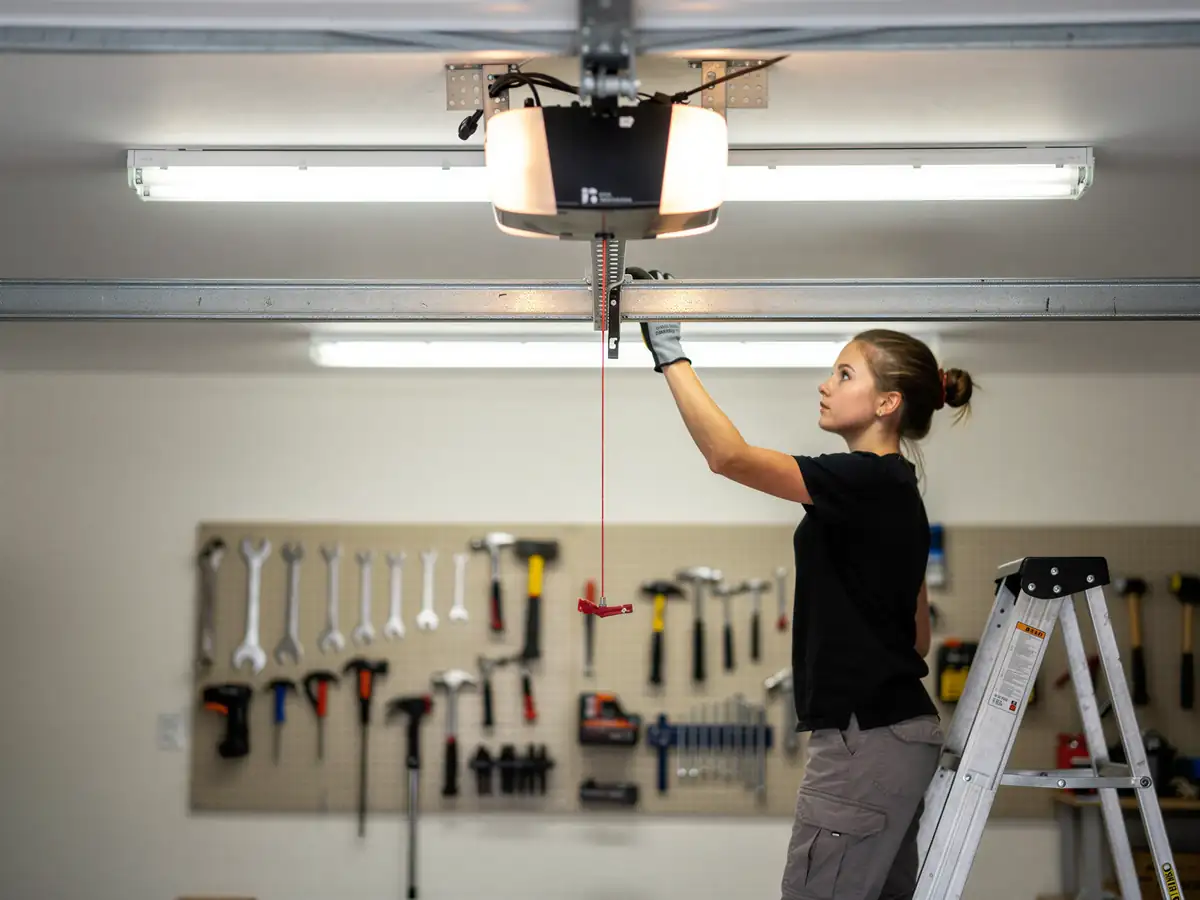
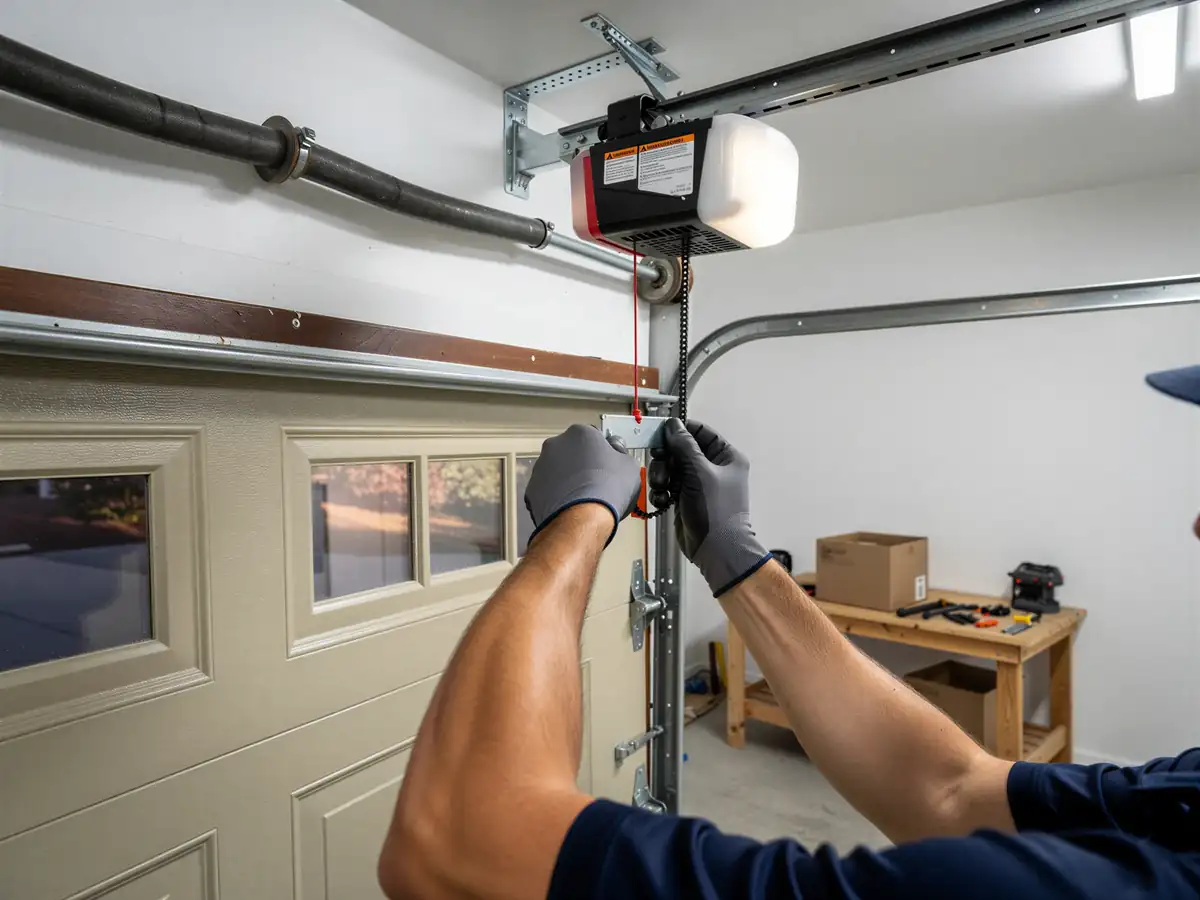
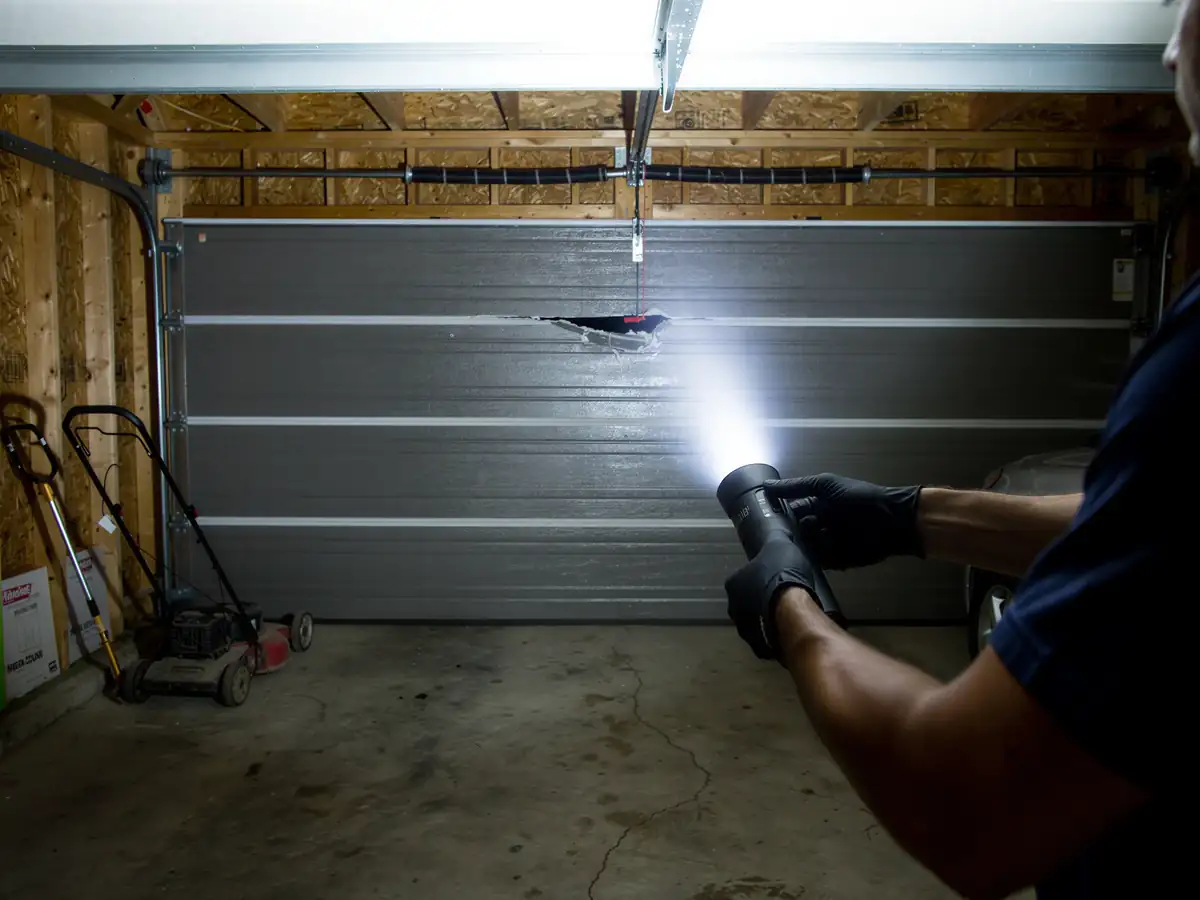
Most garage doors in Nuevo went up around 1990, which puts them a few years newer than the typical door across the rest of our service area. That means steel sectional doors, two or three panels wide, hung on torsion springs mounted on a center shaft above the opening rather than the older side-mounted extension setups you'll find on pre-1980s stock. The springs and rollers in these doors were built for a normal duty cycle, not for the kind of severe heat this region sees for months at a stretch. Heat doesn't just fade the paint. It dries out lubricant on rollers and hinges faster than you'd expect, and it causes the steel torsion spring to lose temper a little quicker over the years, so the door starts to feel heavier at the midpoint of its travel before it ever actually breaks. Owners usually notice it as a grinding sound on the way up, a door that reverses on its own, or an opener that strains and clicks before it catches. None of that is an opener problem by itself - it's usually the spring and rollers telling you they're past the point where oil fixes it.
What Is on the Truck
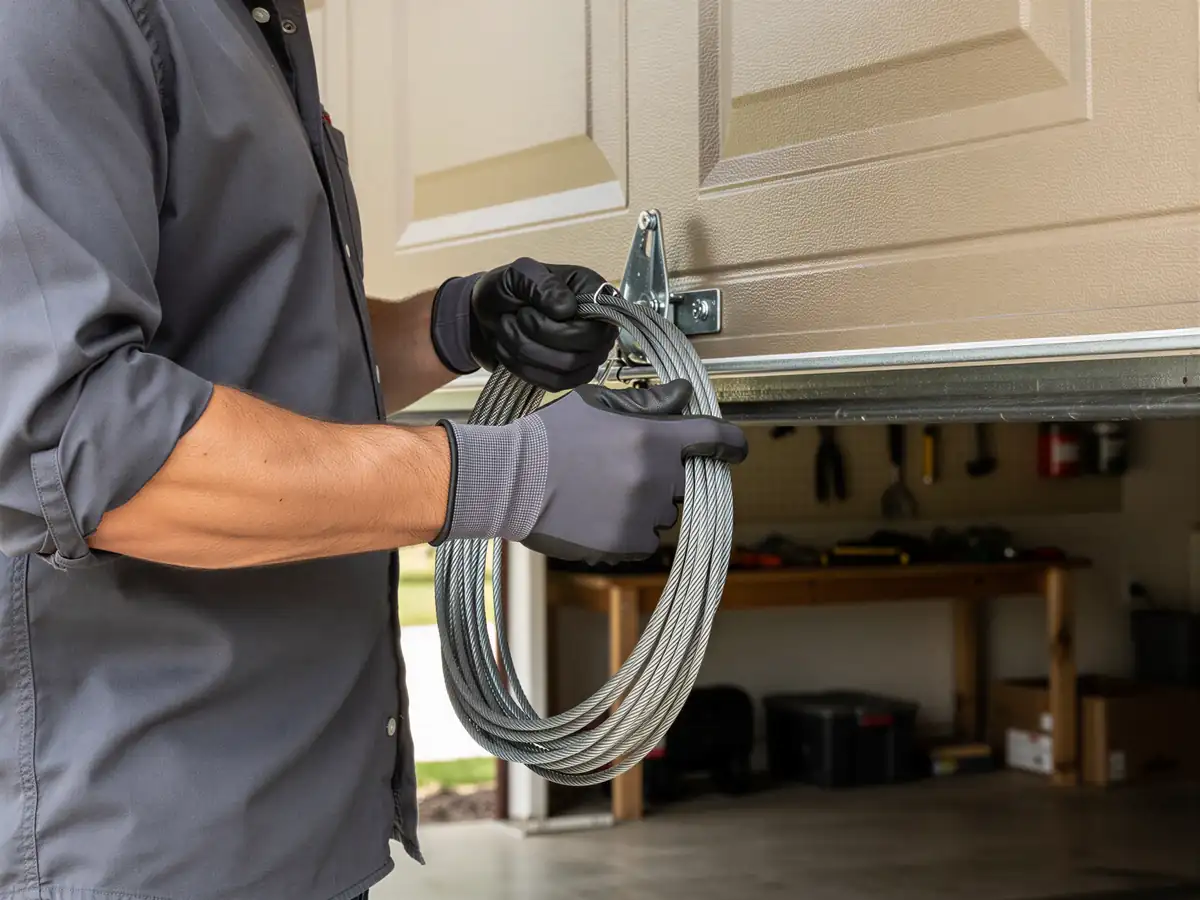
We carry torsion springs sized for the common door weights and widths you'll find on 1980s-through-2000s sectional doors across this area, along with nylon rollers, standard-size hinges, and high-temp lube, because those are the parts that wear out from heat exposure, not from age alone. What we don't always carry is a spring wound to an odd door weight or an opener-specific circuit board for a less common brand - those sometimes mean a second trip once the part's ordered in. We travel to Nuevo from our shop in Menifee, about 8 miles out, so if a job needs a part we don't have on hand, we'll tell you that up front rather than guessing and hoping it's in the truck.
Doing It Yourself
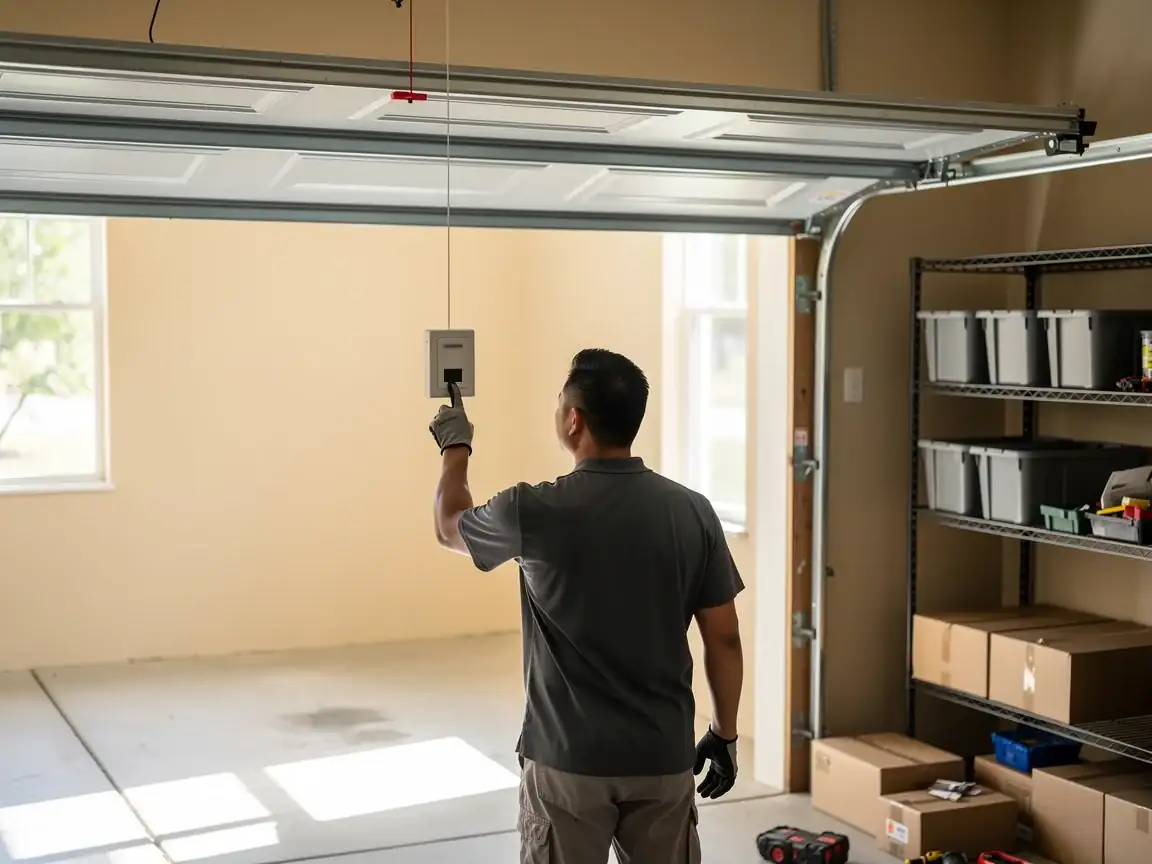
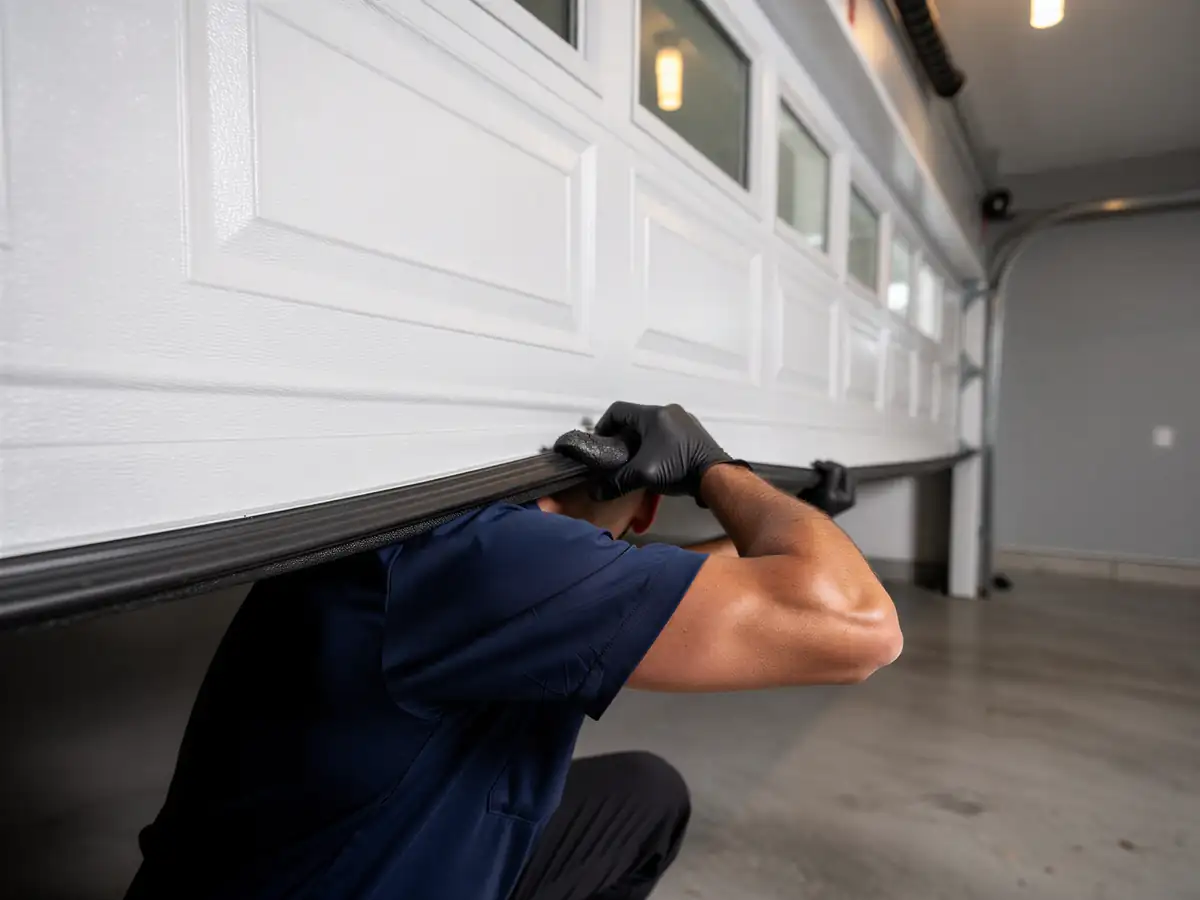
Lubricating hinges and rollers every few months is worth doing yourself, and in this heat it matters more than most owners think - dry metal-on-metal contact wears faster when temperatures swing hard between day and night. Wipe down the tracks and check that the door is still balanced: disconnect the opener, lift the door halfway by hand, and see if it holds roughly in place. If it drops or shoots up, the spring tension is off, and that's not a DIY adjustment. Torsion springs store enough force to cause serious injury if you try to rewind or replace one without the right bars and clamps, so that part of the job stays with us. If your door is still within its original duty cycle and just needs lube and a balance check, you can handle that between visits.