How It Shows Up
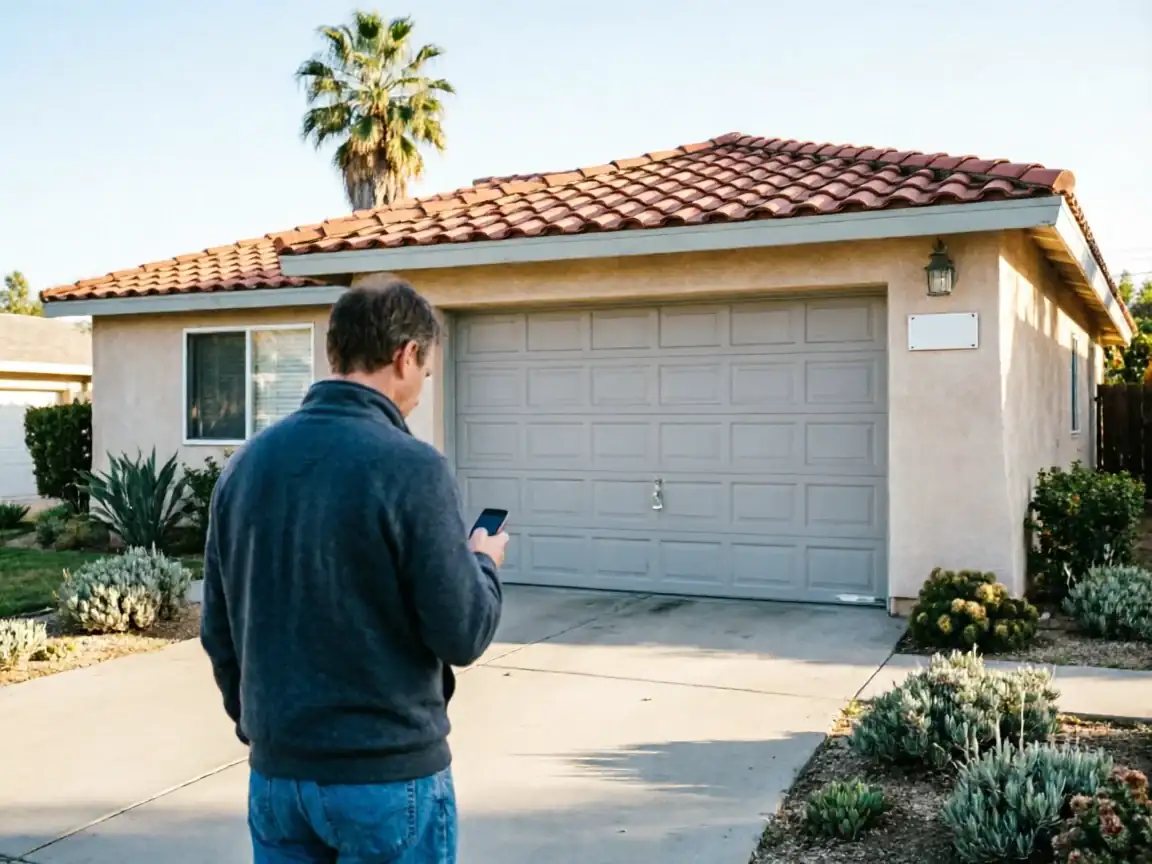
Nuevo is a small place - about 1,795 households, nowhere near the call volume of the bigger towns in this service area. That matters, because it means fewer local companies bother driving out here regularly, and a lot of homeowners end up waiting on someone who treats the trip as an afterthought. We don't.
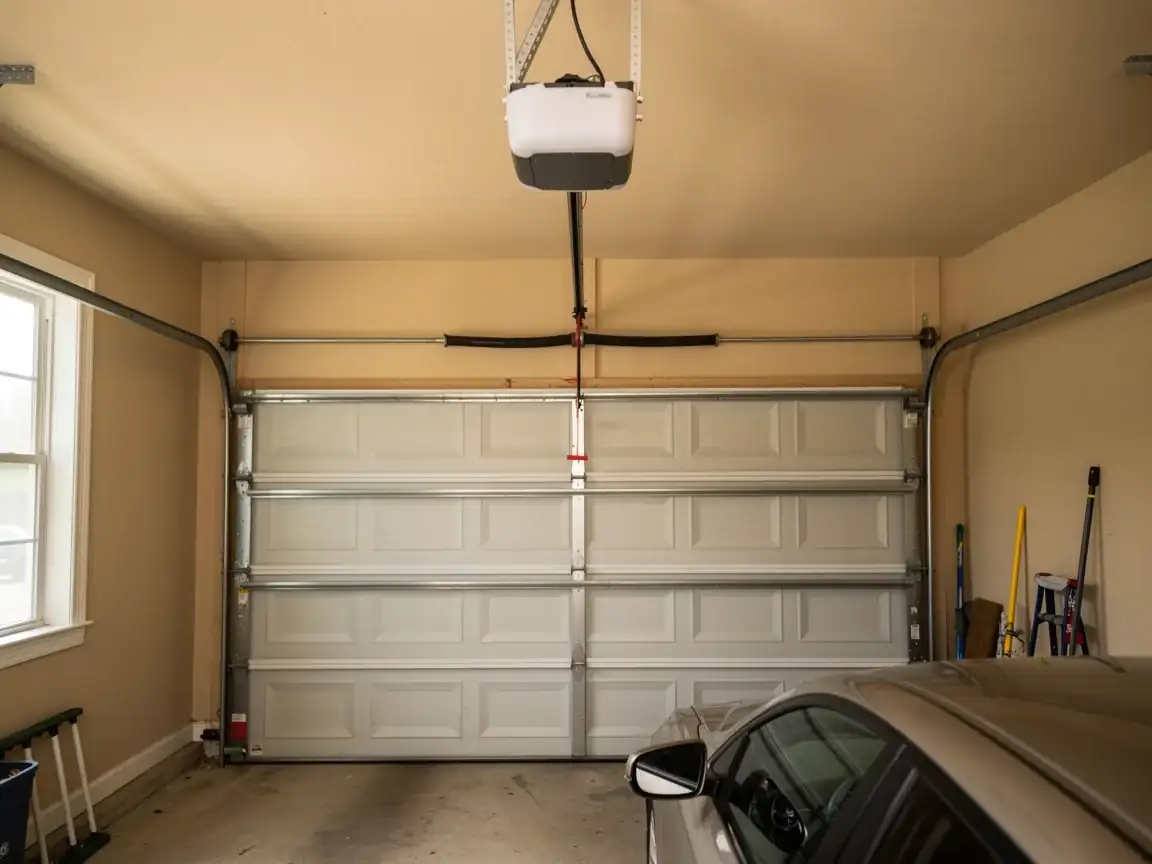
Most of the housing stock here went up around 1990, a little newer than the 1974-2009 spread you see across the wider service area. That generation of door is usually a steel sectional on an extension or torsion spring setup, often with the original chain-drive opener still running after three decades. By year thirty, the spring has usually already been swapped once, the opener's drive gear is worn thin, and the rollers are the original nylon, cracked and loud.
Heat is the other factor. This area sits in a severe heat band, and openers and spring steel both take a beating from it - plastic gears get brittle, lubricant dries out of the springs faster than it would somewhere milder, and a door that worked fine in spring seizes up on the first 100-degree week. If your door's been fine for years and suddenly won't budge in July, that's usually why.
How We Fix It
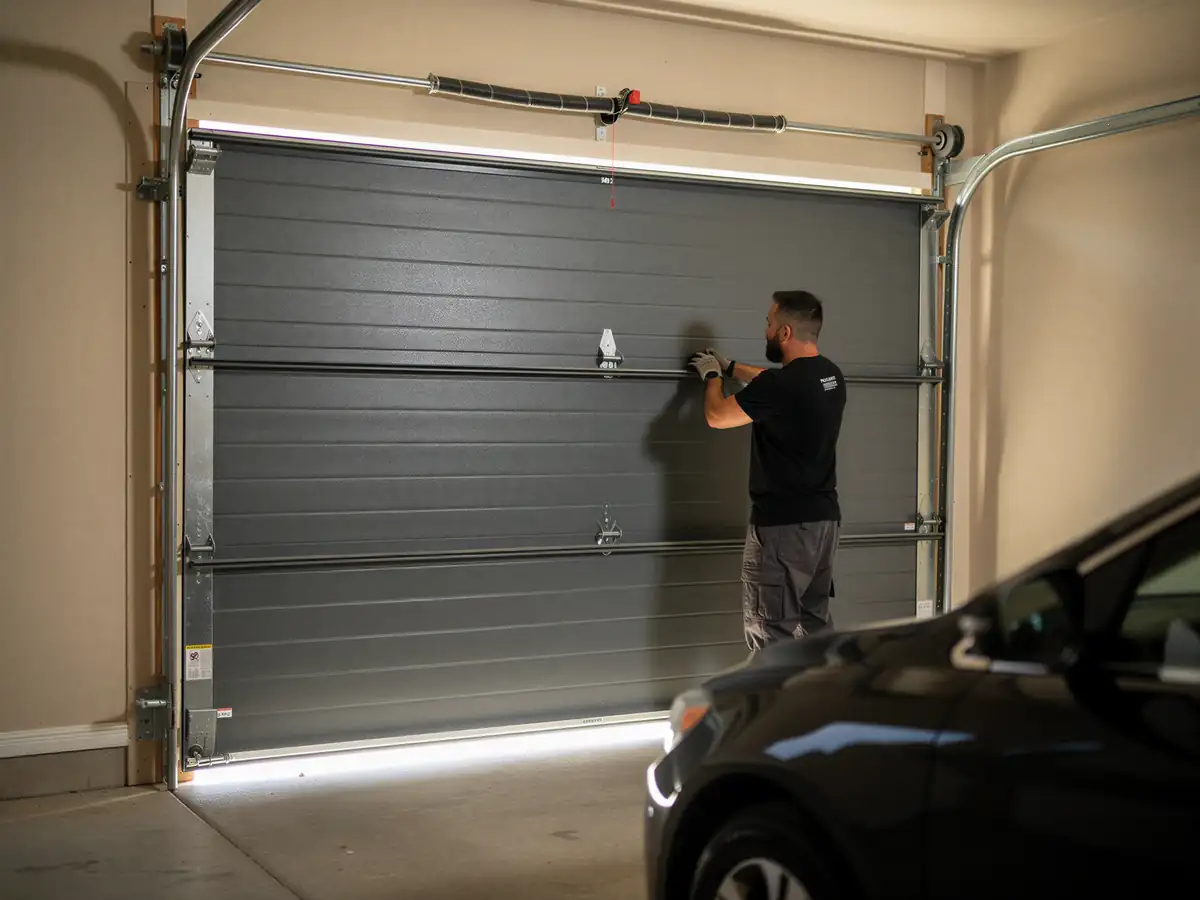
We diagnose on site before we touch anything
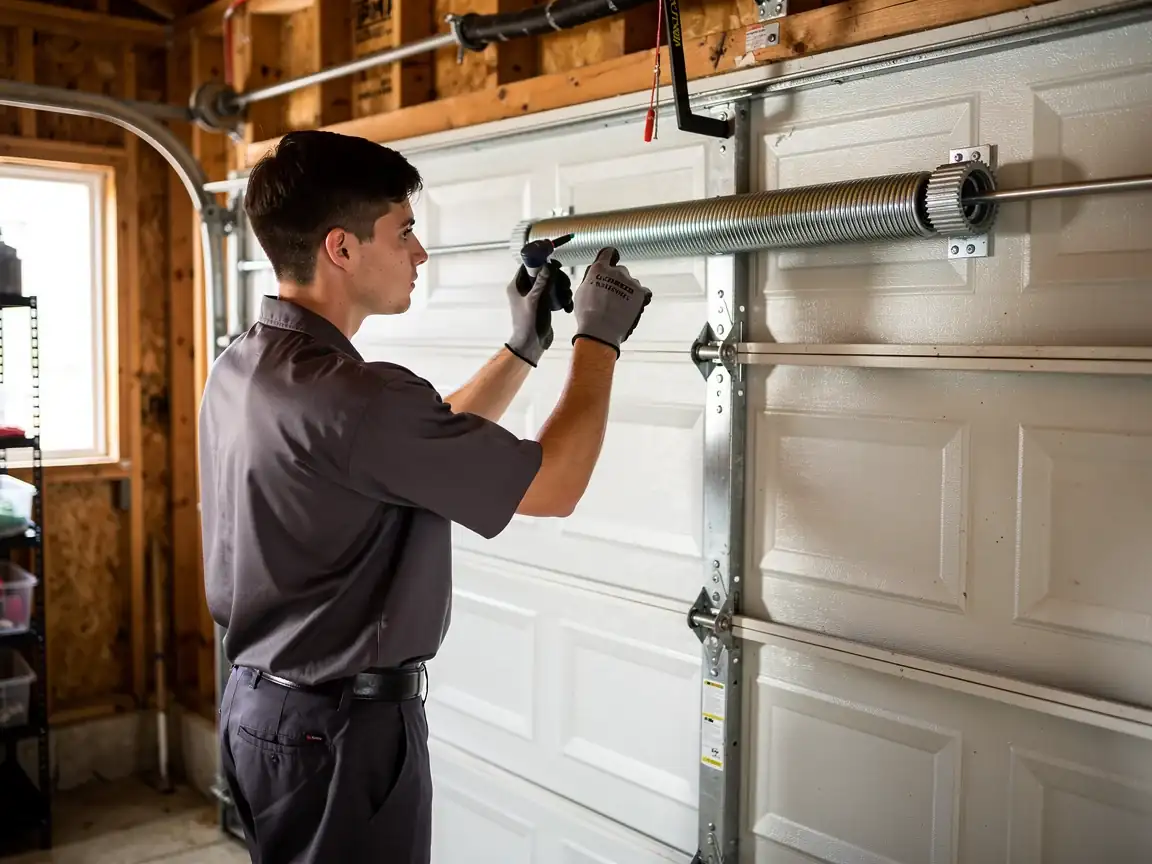
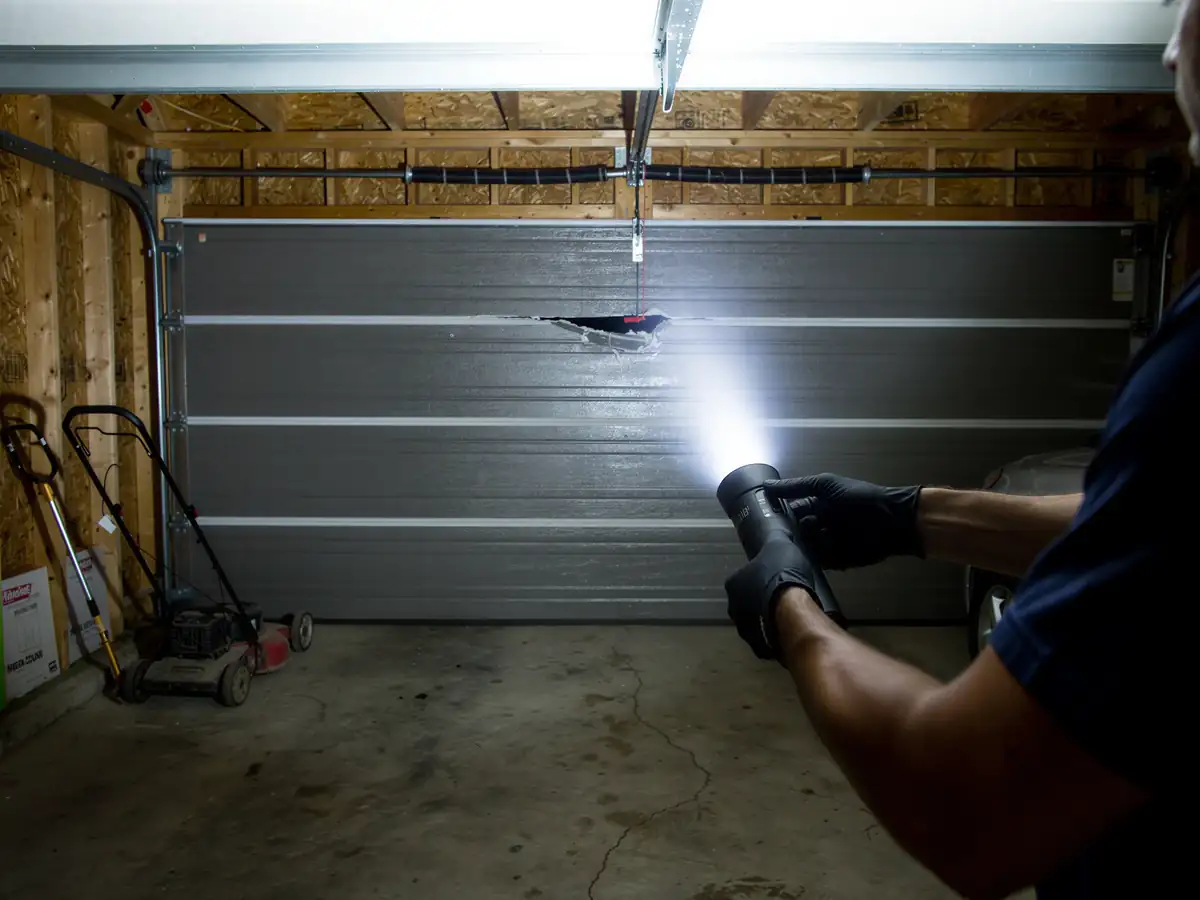
A stuck door can be a dead spring, a burnt opener capacitor, a bent track, or a sensor knocked out of alignment, and treating the wrong one wastes your money. For a torsion spring job we measure wire gauge and coil length against your actual door weight rather than guessing off a chart, because a spring that's slightly wrong wears the opener and the cables faster.
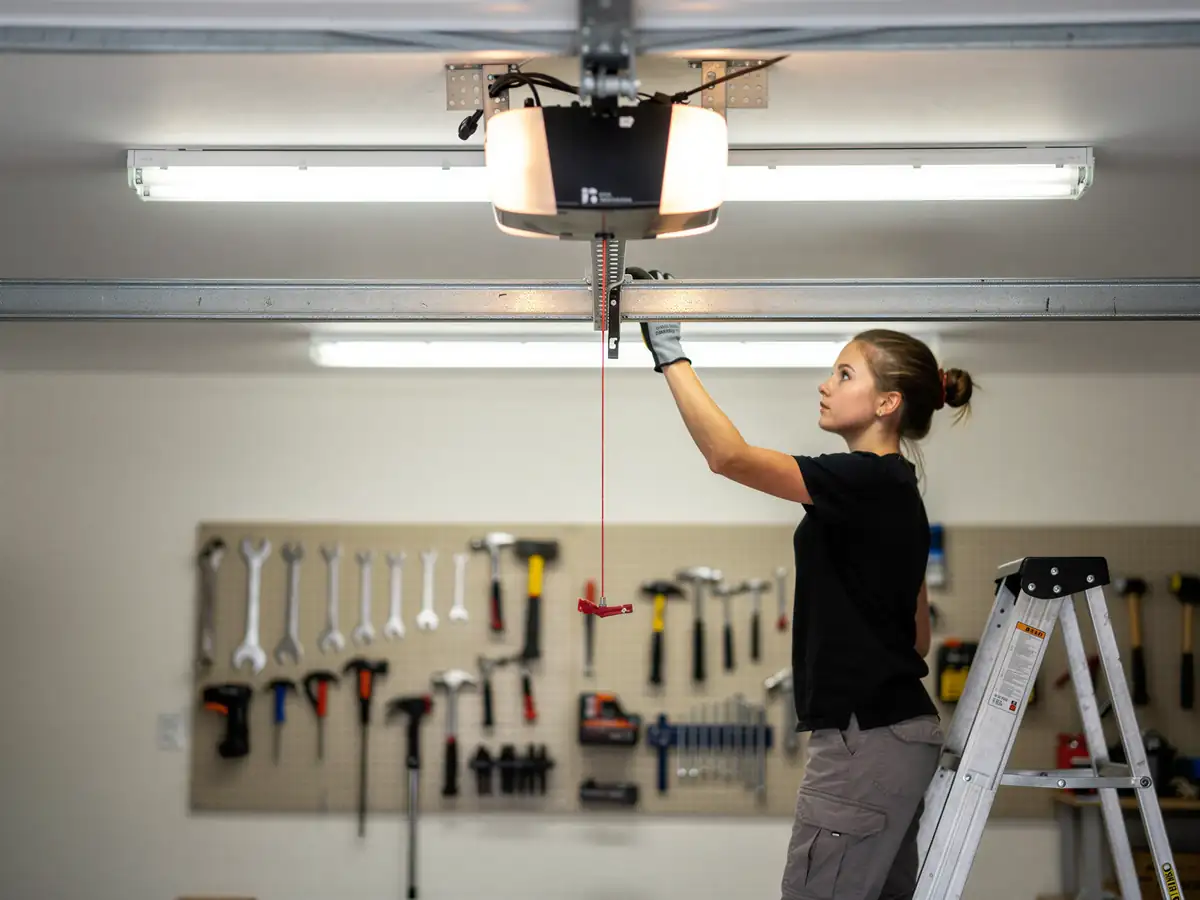
On doors from the 1990 era we often find the opener itself is the weak link before the door is
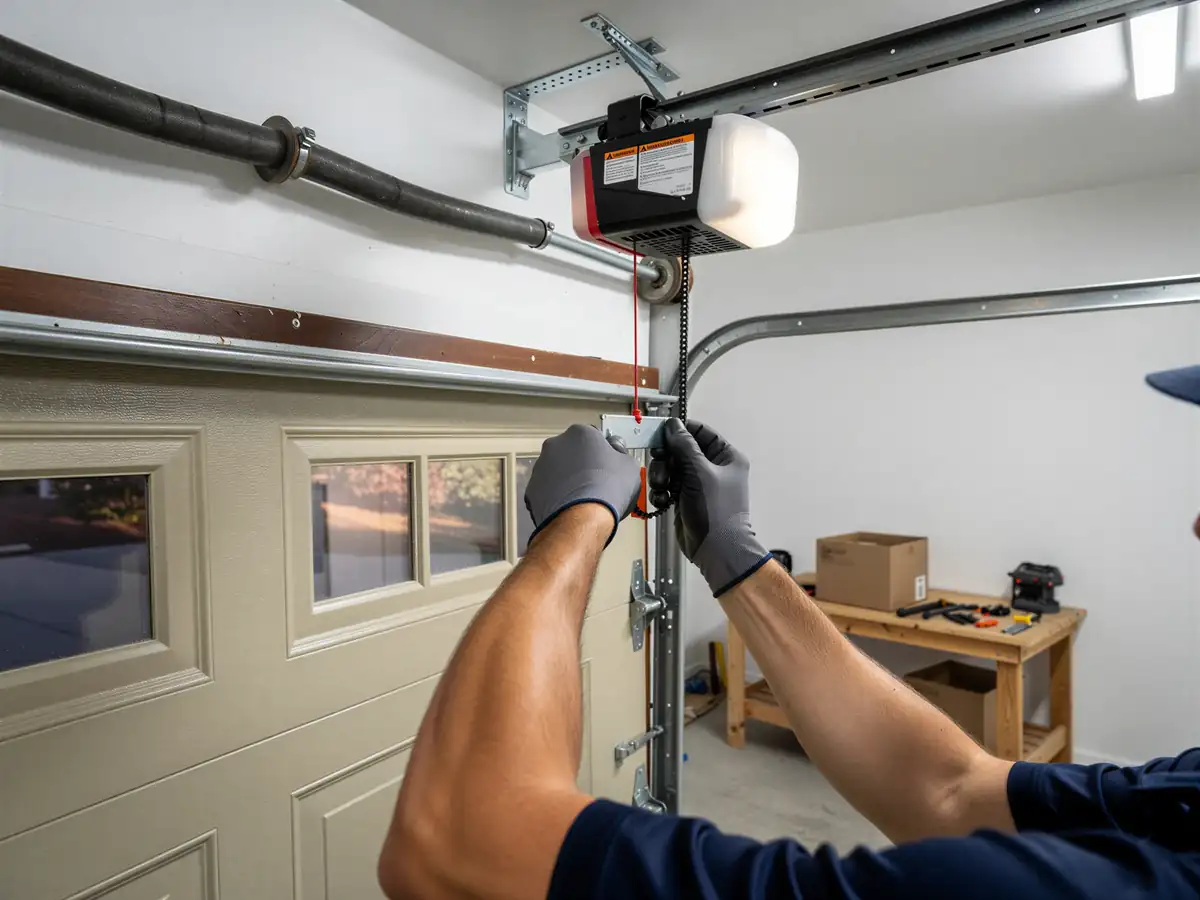
If the drive gear's stripped or the logic board's dead, replacing just the opener head is usually cheaper than people expect, and it's a same-visit job in most cases. We'll tell you straight if a repair isn't worth it - a door with a badly rusted track or a warped panel from age sometimes costs more to patch piece by piece than to replace outright, and we'd rather say that up front than bill you for a temporary fix.
One honest limit: specialty panel colors or discontinued hardware from older builds sometimes have to be special-ordered
And that can add a few days to a cosmetic repair even after the functional fix is done the same day.
What Is on the Truck
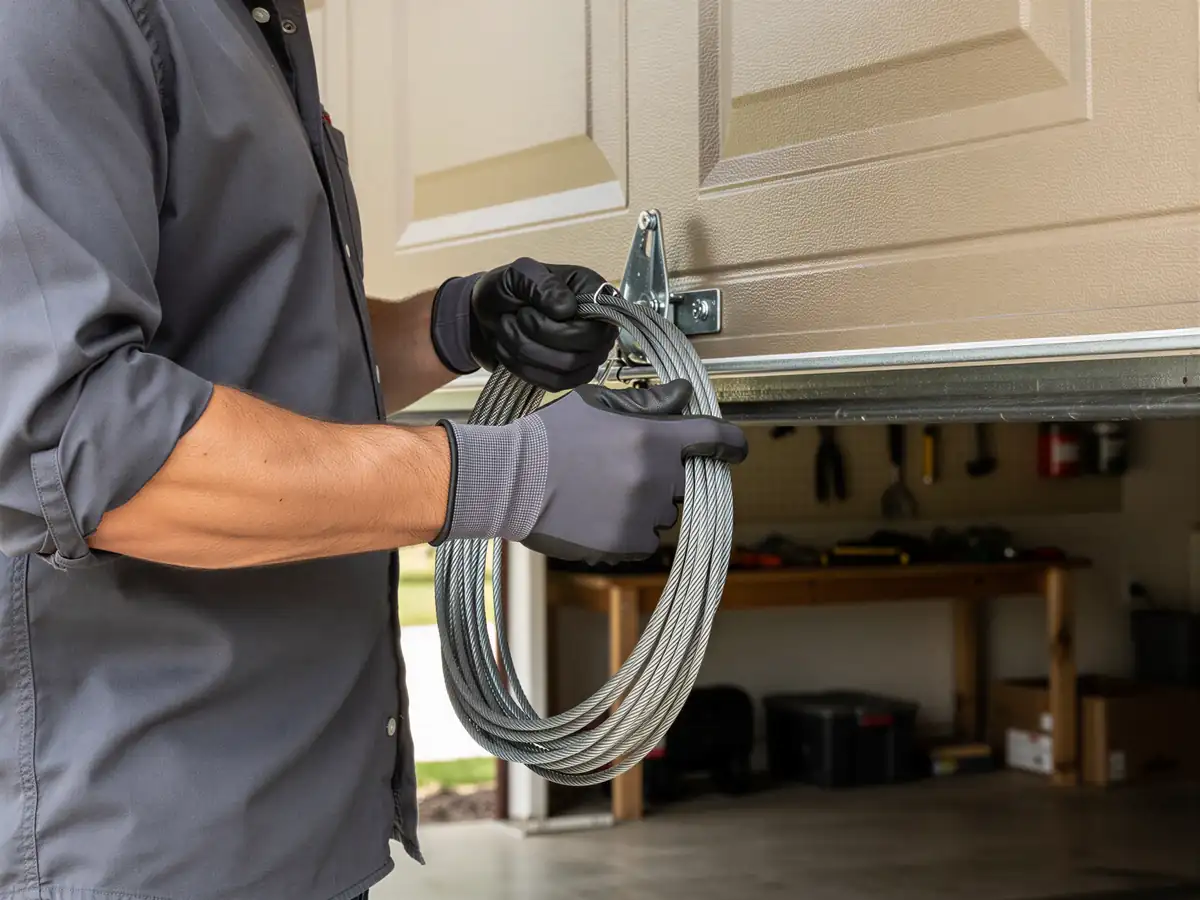
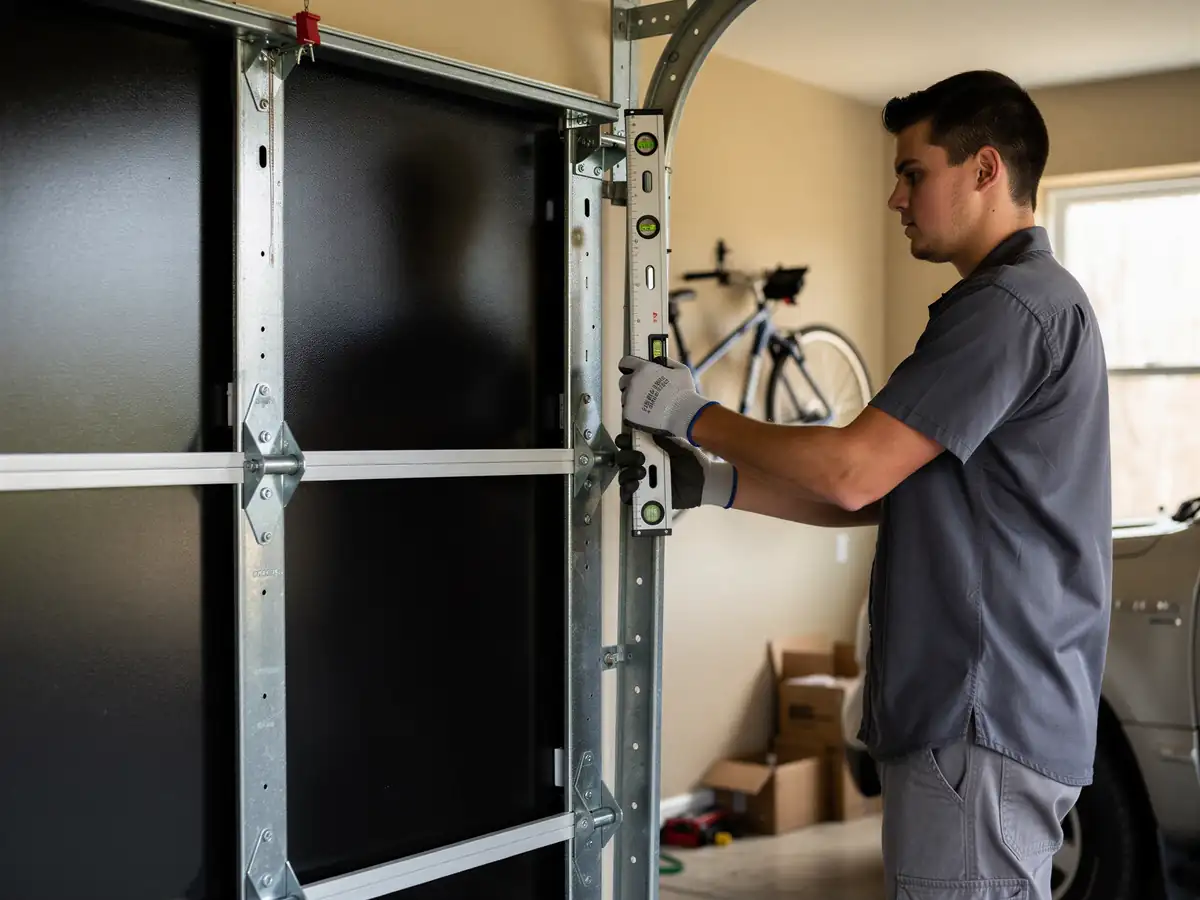
The truck carries torsion and extension springs across the common residential weight ranges, standard-gauge lift cables, nylon and steel rollers, and track sections sized for single and double doors, since those are the parts that fail most on a town this age. We also stock universal opener logic boards and drive gears that cover most chain and belt-drive openers still in service from builds in the 1990s range.
What we don't carry as standard stock is specialty trim kits or discontinued panel styles - those get ordered once we've confirmed the exact model on site, which is the honest trade-off of covering a wide service area instead of running a single warehouse down the street. We'd rather tell you that than promise a part we don't have in hand.
Doing It Yourself
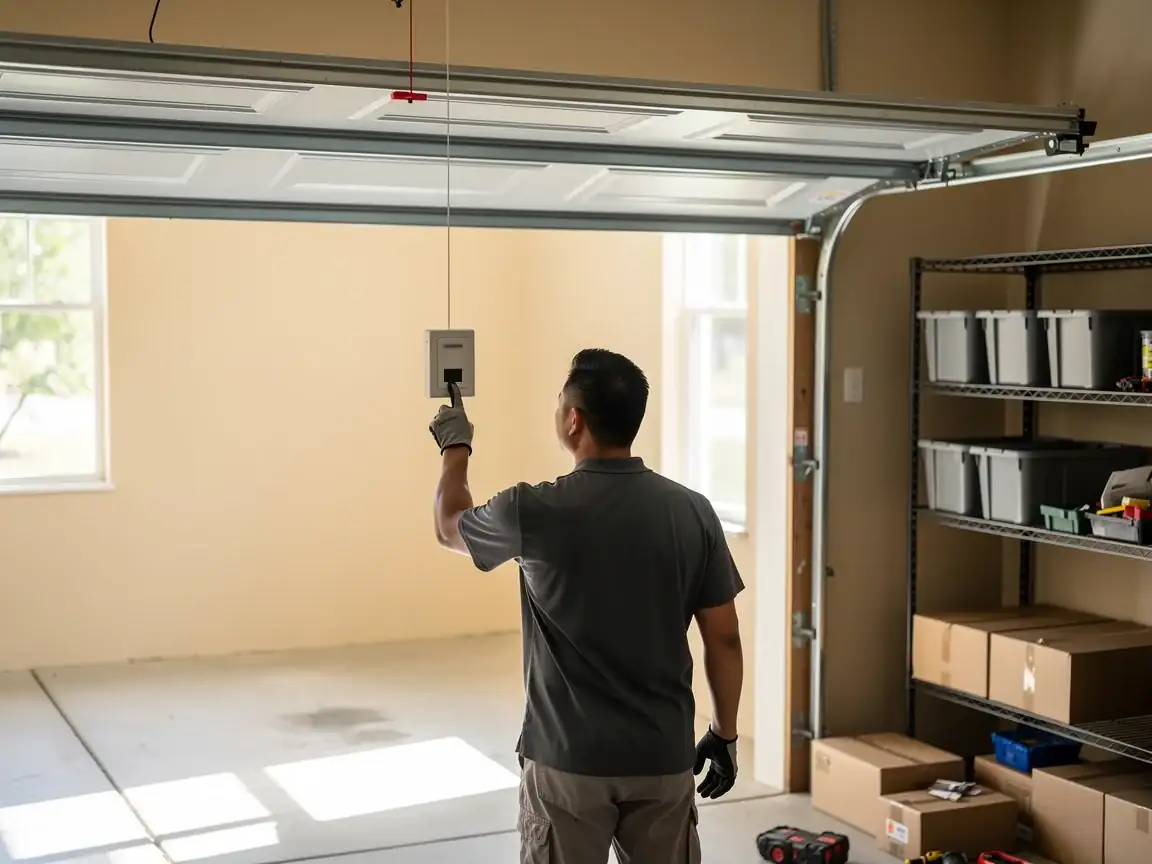
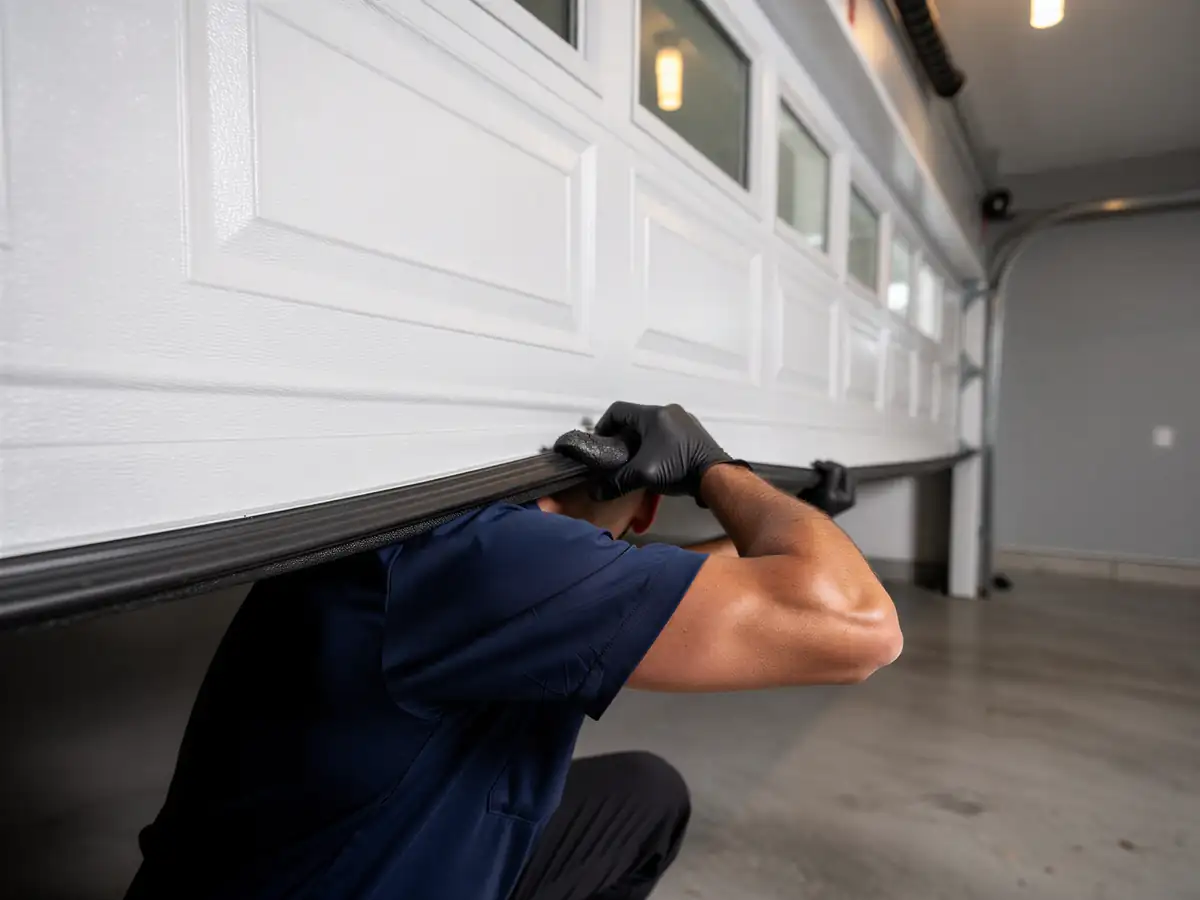
There's a short list of things worth checking before you call anyone. Dead opener remote batteries and a dirty photo-eye sensor (the small lens near the bottom of each track) cause more "broken door" calls than actual broken doors. Wipe the sensor lenses, check the remote battery, and try the wall button directly - if the wall button doesn't move the door either, the problem is upstream of the remote.
What you shouldn't touch yourself: the torsion spring itself. It's wound under enough tension to cause serious injury, and on a door this age the spring has likely already outlived its rated cycle count, which means it's more likely to let go under load. If the door is heavy to lift by hand with the opener disconnected, that's a spring problem, not an opener problem, and it's not a weekend project.