How It Shows Up
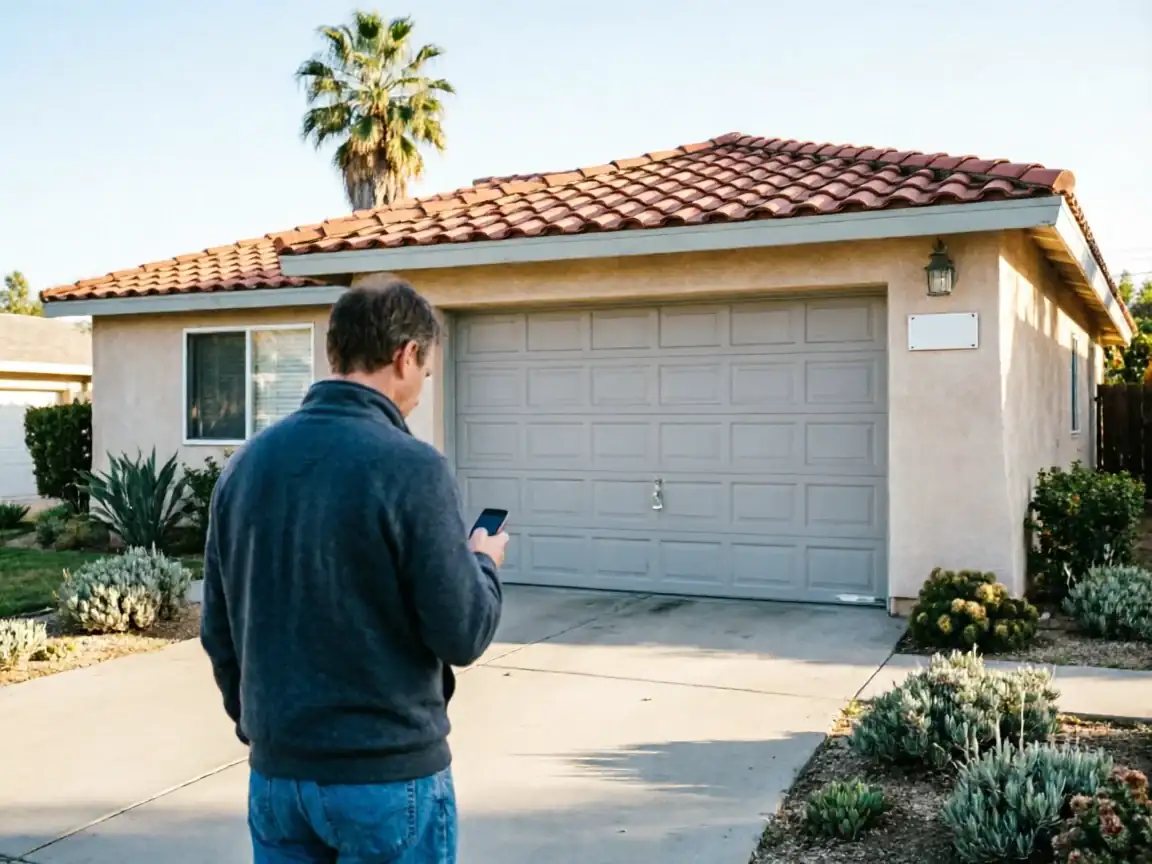
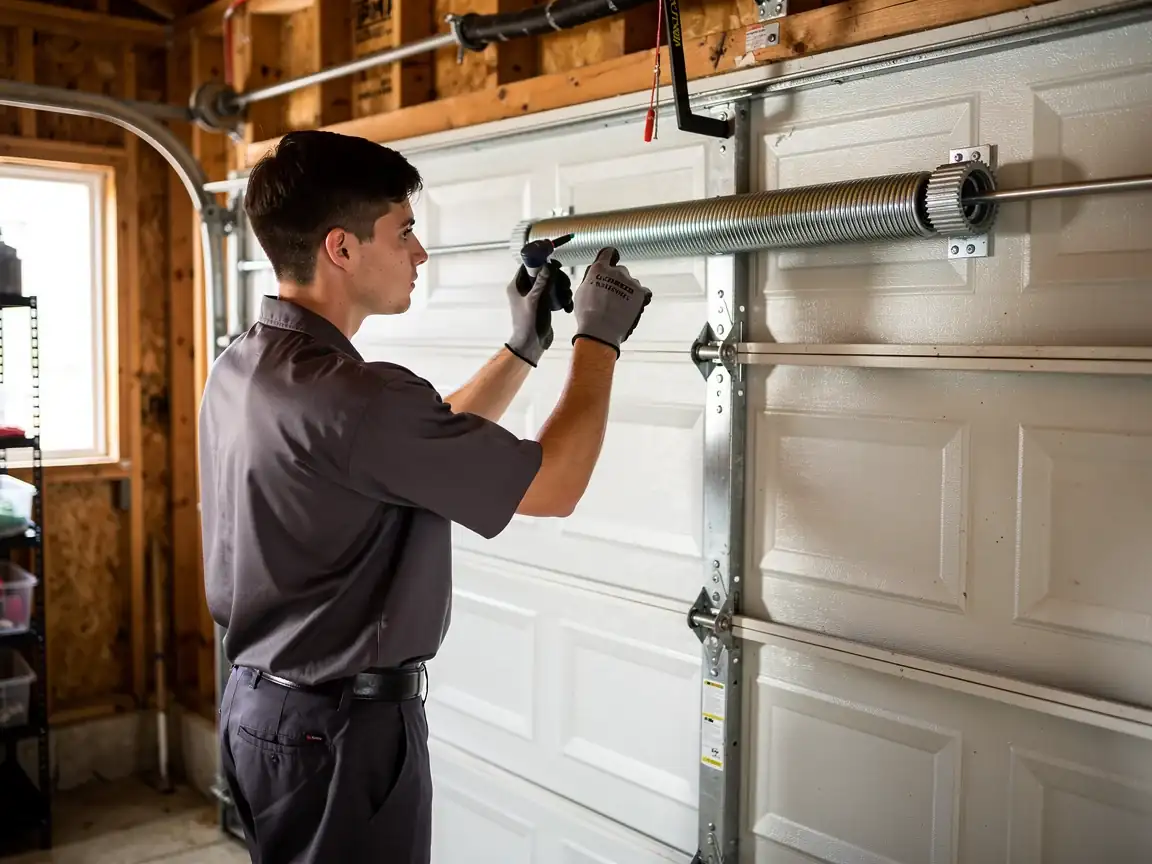
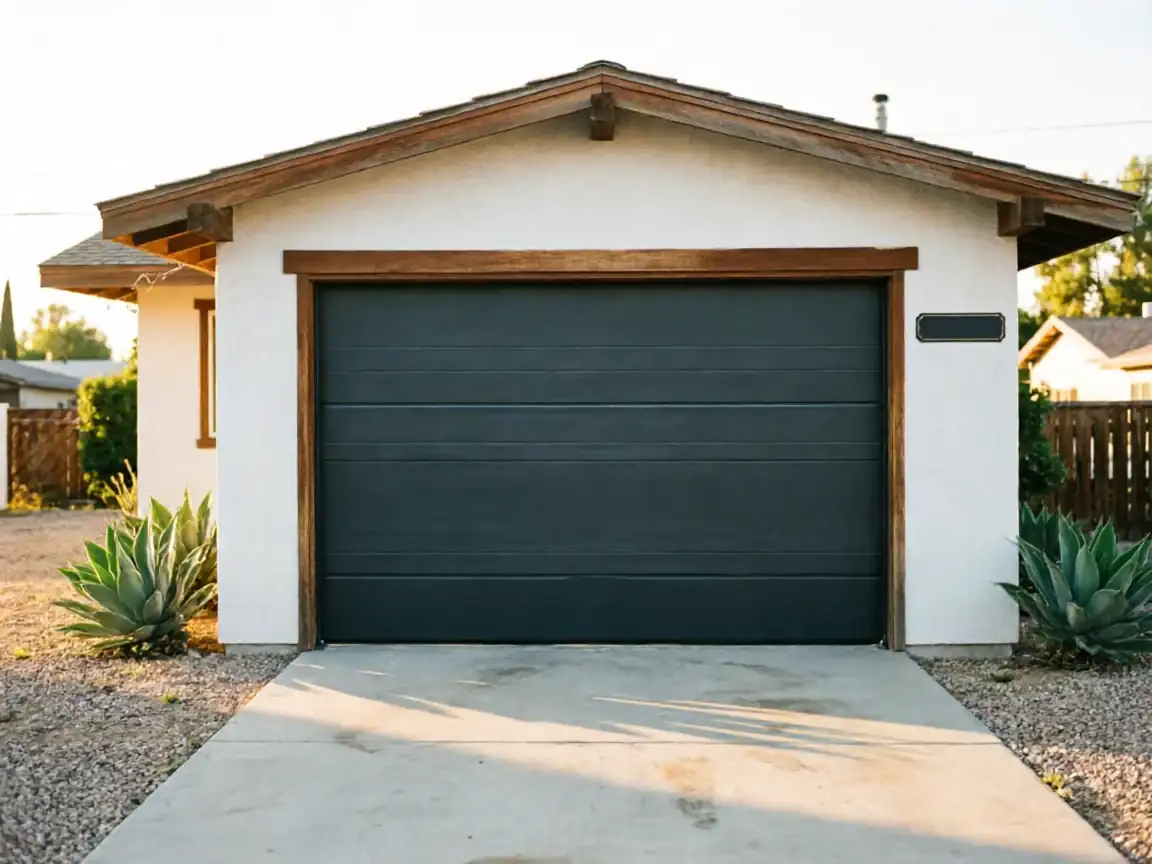
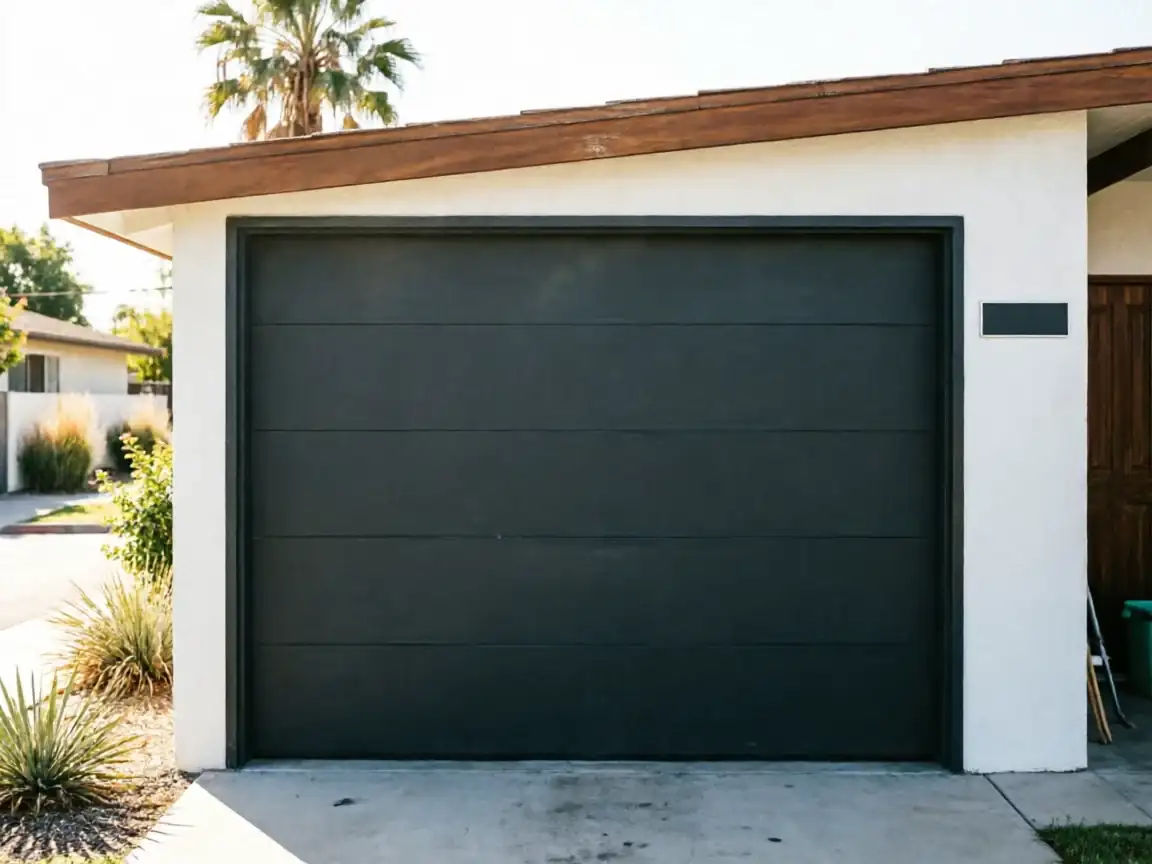
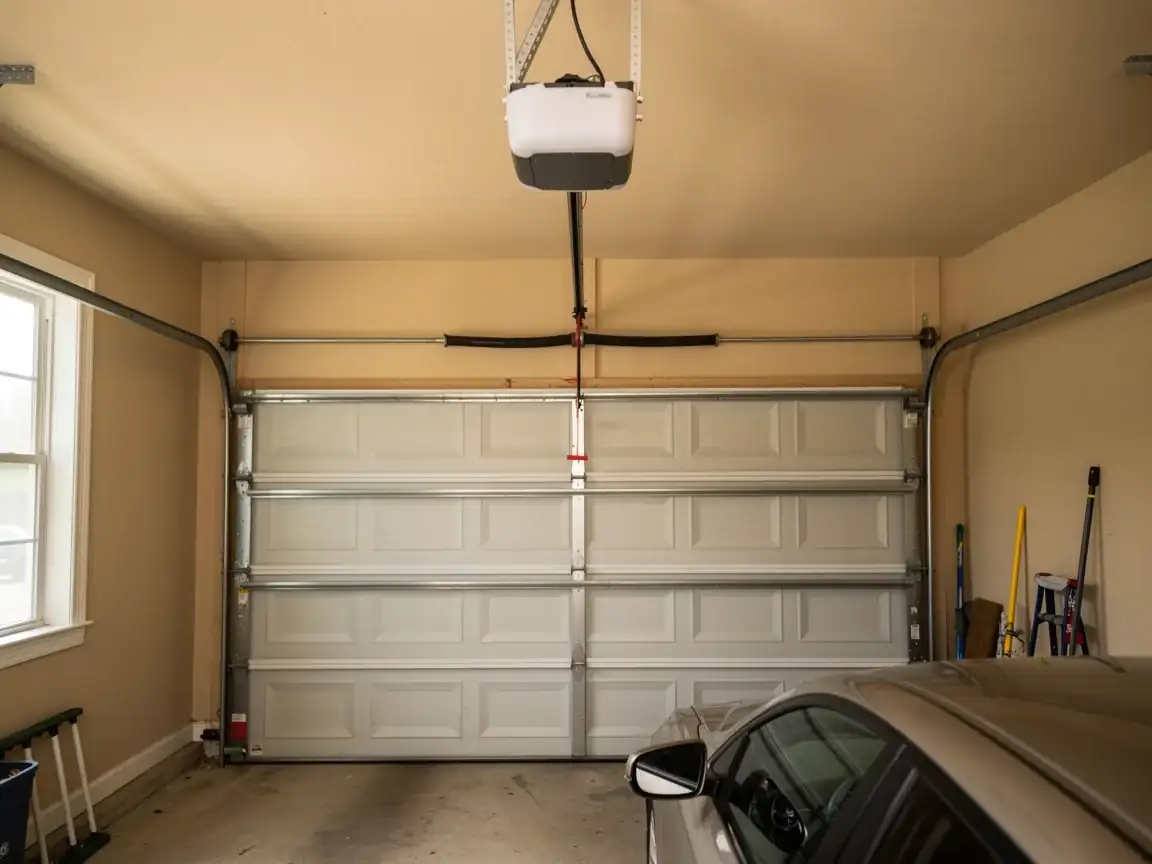
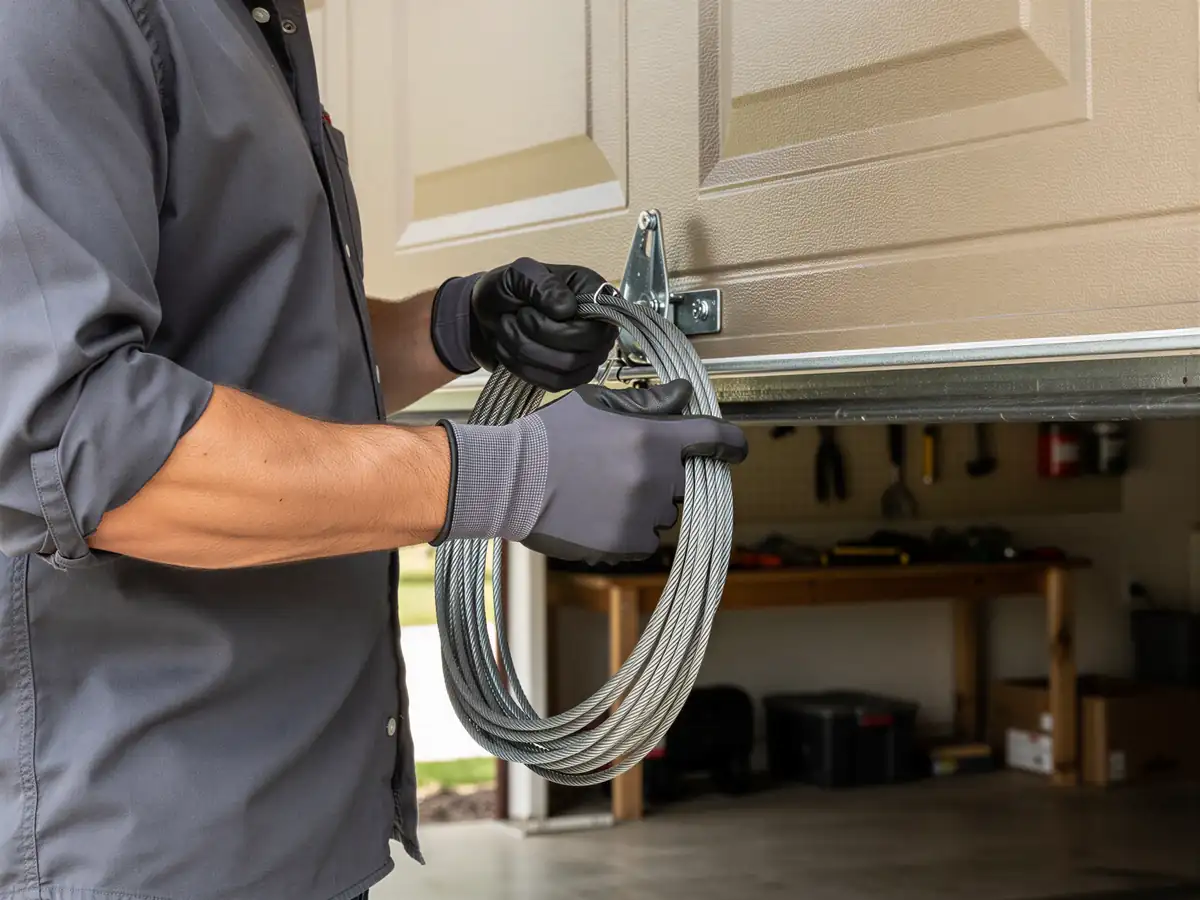
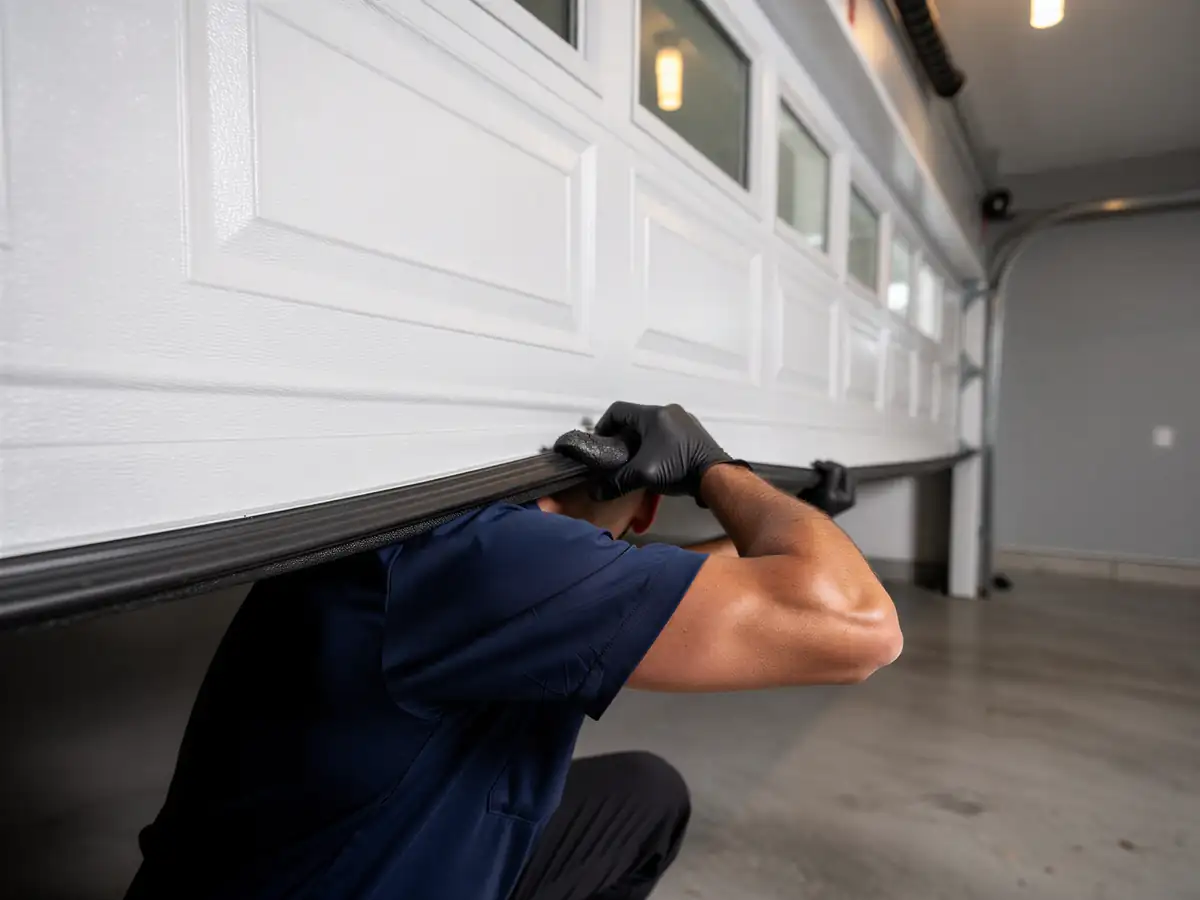
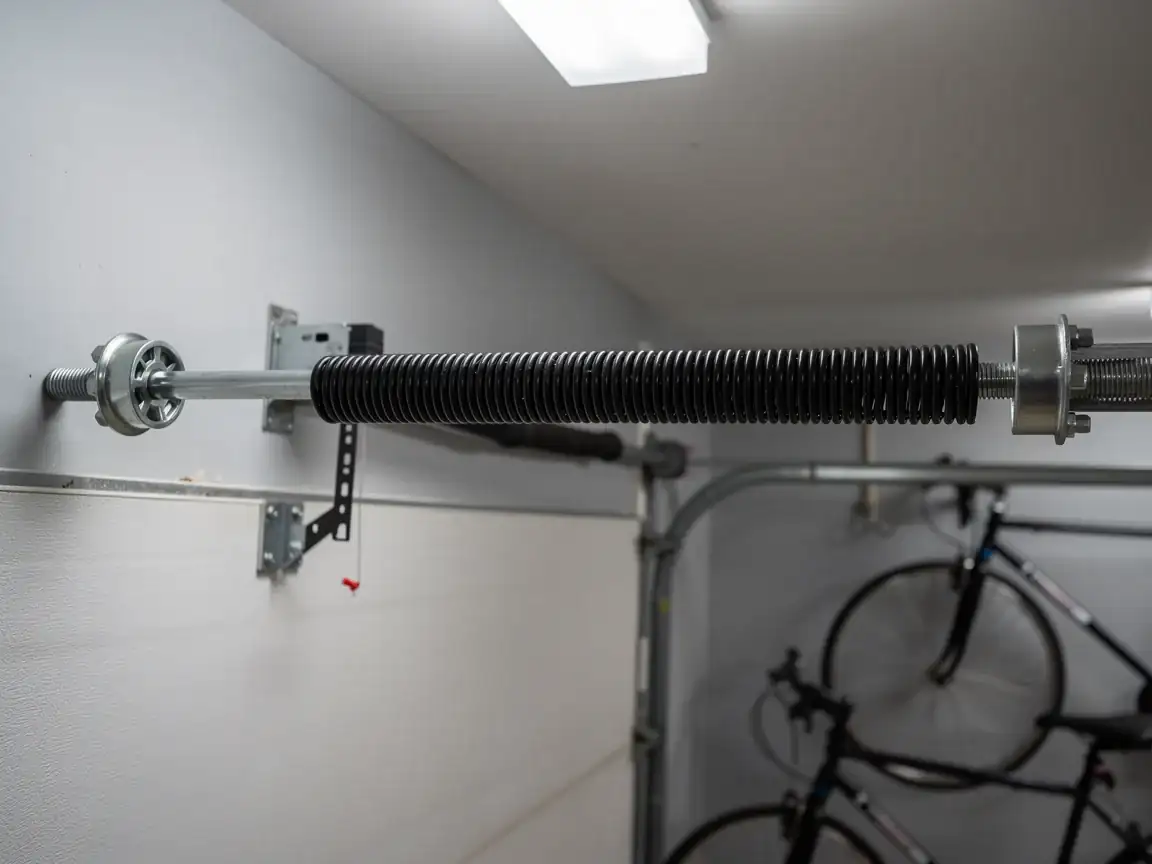
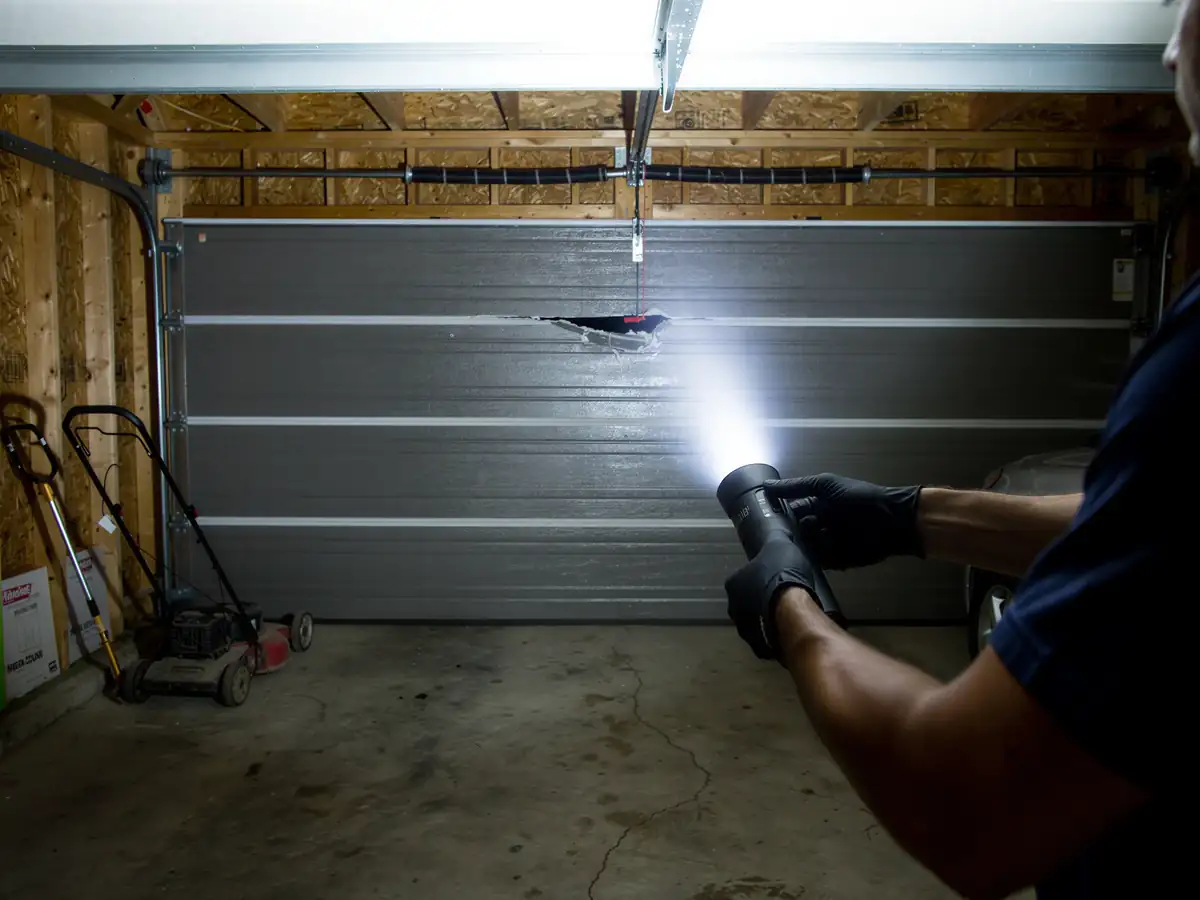
The call usually starts the same way: the door won't budge, or it came down crooked and now it's wedged on one side. In Menifee, where most houses went up between 1974 and 2009 with a cluster of construction through the 1980s and 90s, the failure is almost always one of three things. A torsion spring snaps clean, usually with a loud bang you hear from inside the house. A cable jumps off the drum because a roller seized or the bottom bracket worked loose. Or the opener runs but the door won't move because a spring is dead and the opener wasn't built to lift the full weight alone.
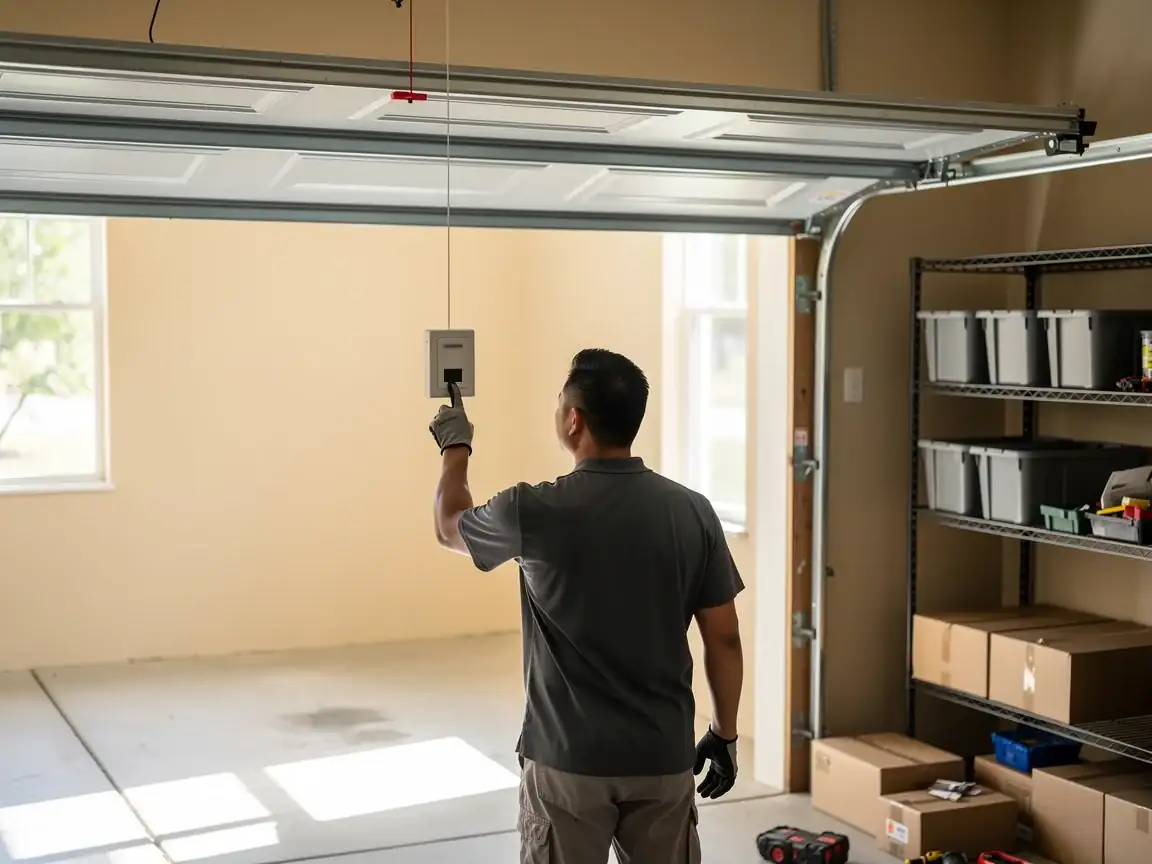
You'll know it's an emergency, not a maintenance item, if the door is stuck halfway, if it's off its tracks, or if a spring has broken and the door is sitting on the floor with the opener straining against it. Don't keep hitting the button. Running an opener against a broken spring or a jammed track is how a $300 repair turns into a new opener and a bent section. If the door is still moving slow but rough, that's worth a call too, before it becomes a 2 a.m. problem.
Why It Happens Here
Menifee's housing stock matters more than people think
With a median build year around 1984 and most of the 24 named tract areas dating to the 1980s and 90s, a lot of original torsion springs and galvanized cable are now 30-plus years old - well past the cycle life they were rated for when the house was built. Springs don't fail on a schedule; they fail on cycle count, and a spring installed under a 1986 roofline has had a lot more open-close cycles than one from a 2005 build.
Heat is the other half of it
This area sits in a severe heat climate band, and summer heat does two things to a garage door system: it dries out and stiffens the lubrication on rollers and hinges, and it expands metal tracks just enough to throw alignment off on older, slightly warped sections. A marginal spring that might have lasted one more winter somewhere milder often lets go here on a 105-degree afternoon, because the steel is working harder and the garage itself is baking all day. That combination - aging 1980s-90s hardware plus sustained heat load - is why spring and cable failures cluster hard through the hot months across this service area.
The Cost of This Job
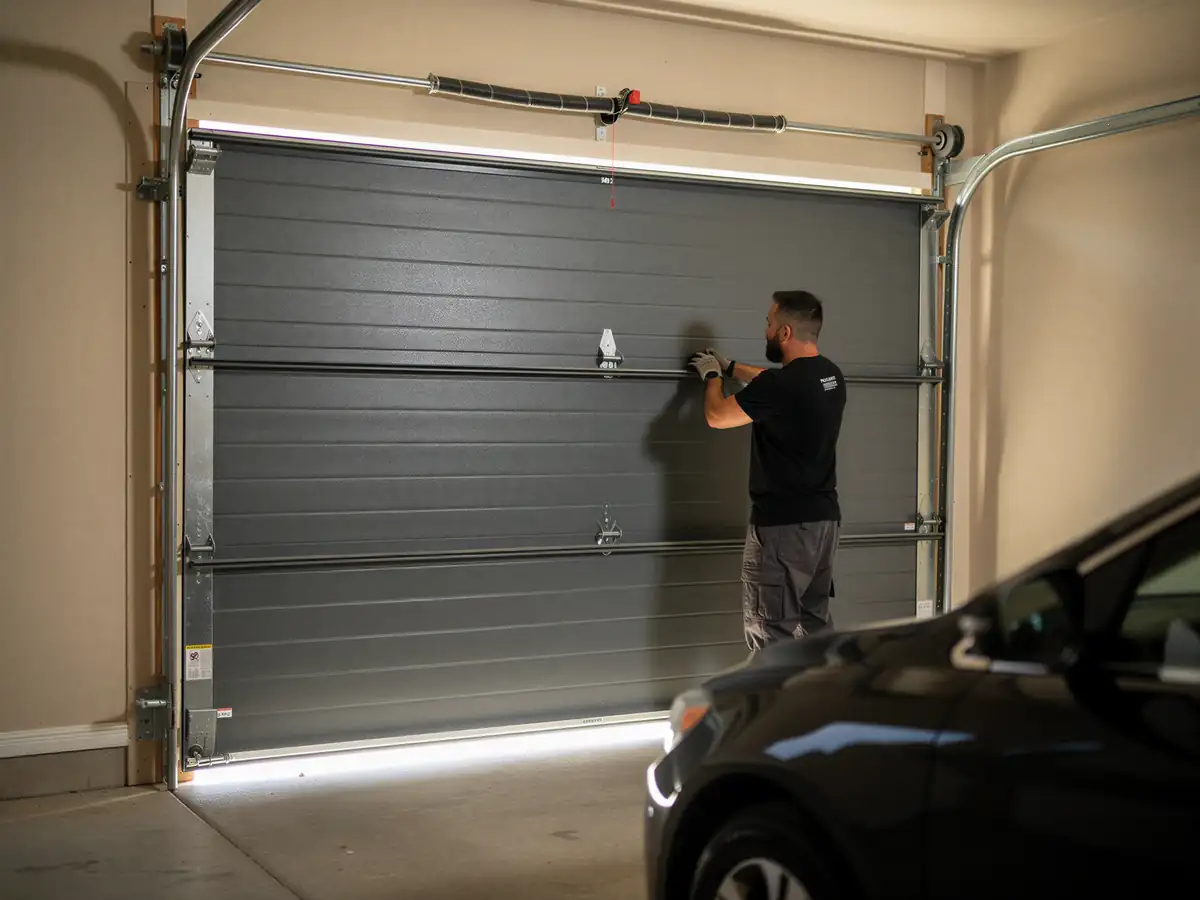
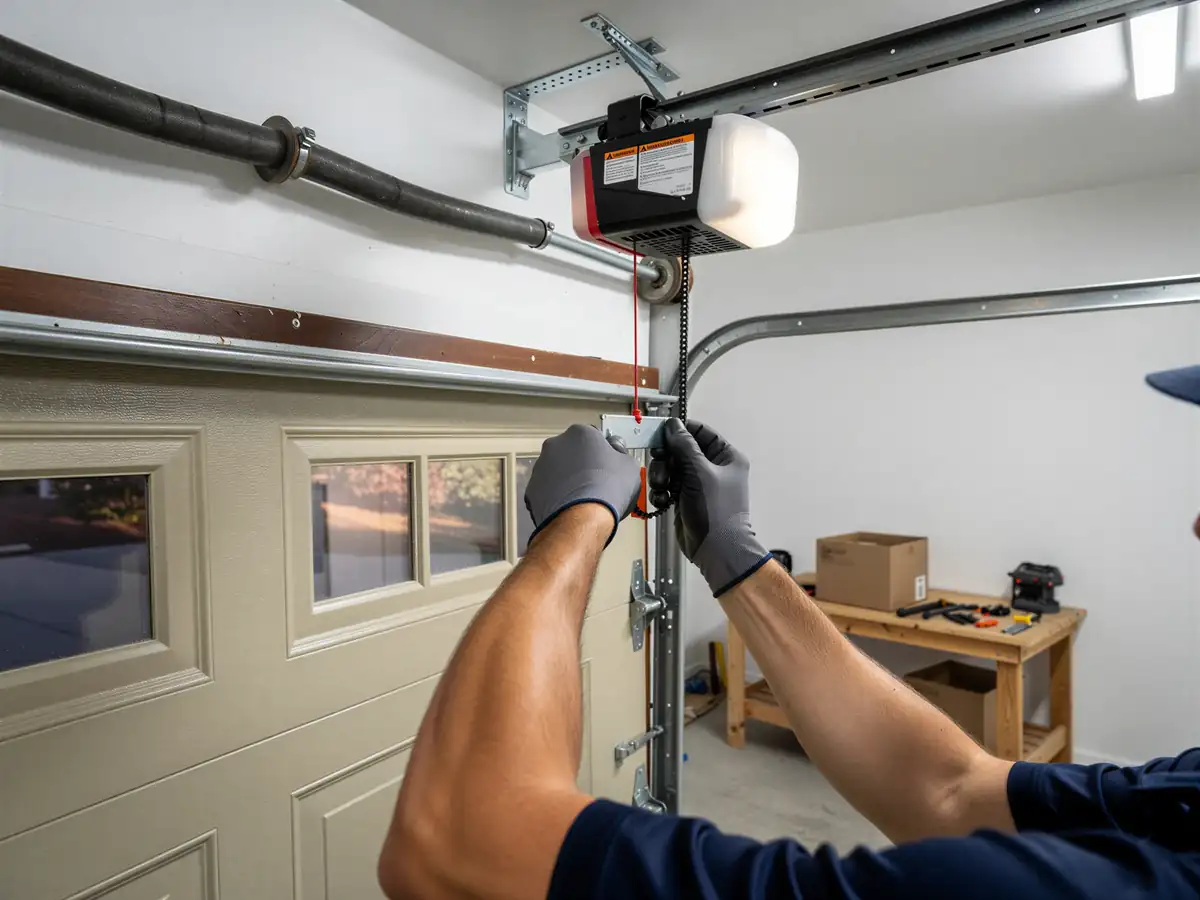
We don't have a fixed number to quote you on this page, because spring size, door weight, and whether the cable or drum also needs replacing all change the job. What we can tell you is how to think about it: a straight spring swap on a standard double door is the baseline job. Add a seized roller, a bent track, or a cable that frayed and damaged the drum, and the job scope grows. If the opener was straining against a dead spring for even a few cycles before you called, have it checked too - gears strip quietly and you won't notice until the door won't open at all.
One honest limitation: if your door and opener are both original to a house built in the 1980s, sometimes the repair bill gets close enough to a full replacement that replacing makes more sense than patching a 35-year-old system piece by piece. We'll tell you straight if that's where your job is heading instead of running up a repair tab on hardware that's on its way out anyway.
Doing It Yourself
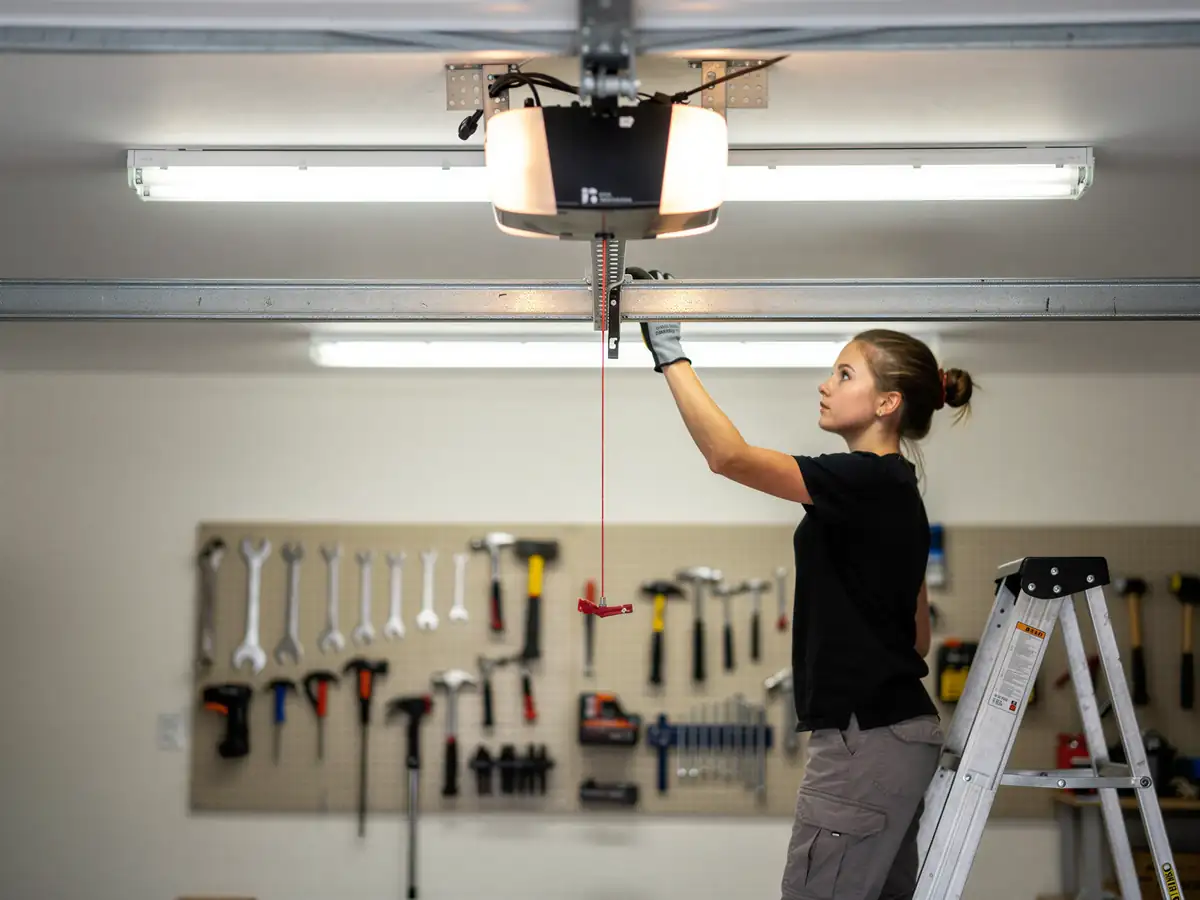
Some things on this list are fine to do yourself. Lubricating rollers and hinges with a garage-door-rated lubricant before summer heat sets in, tightening loose bolts on the track brackets, and checking that the photo-eye sensors near the floor are clean and aligned - all reasonable homeowner jobs that help your door handle the heat load better.
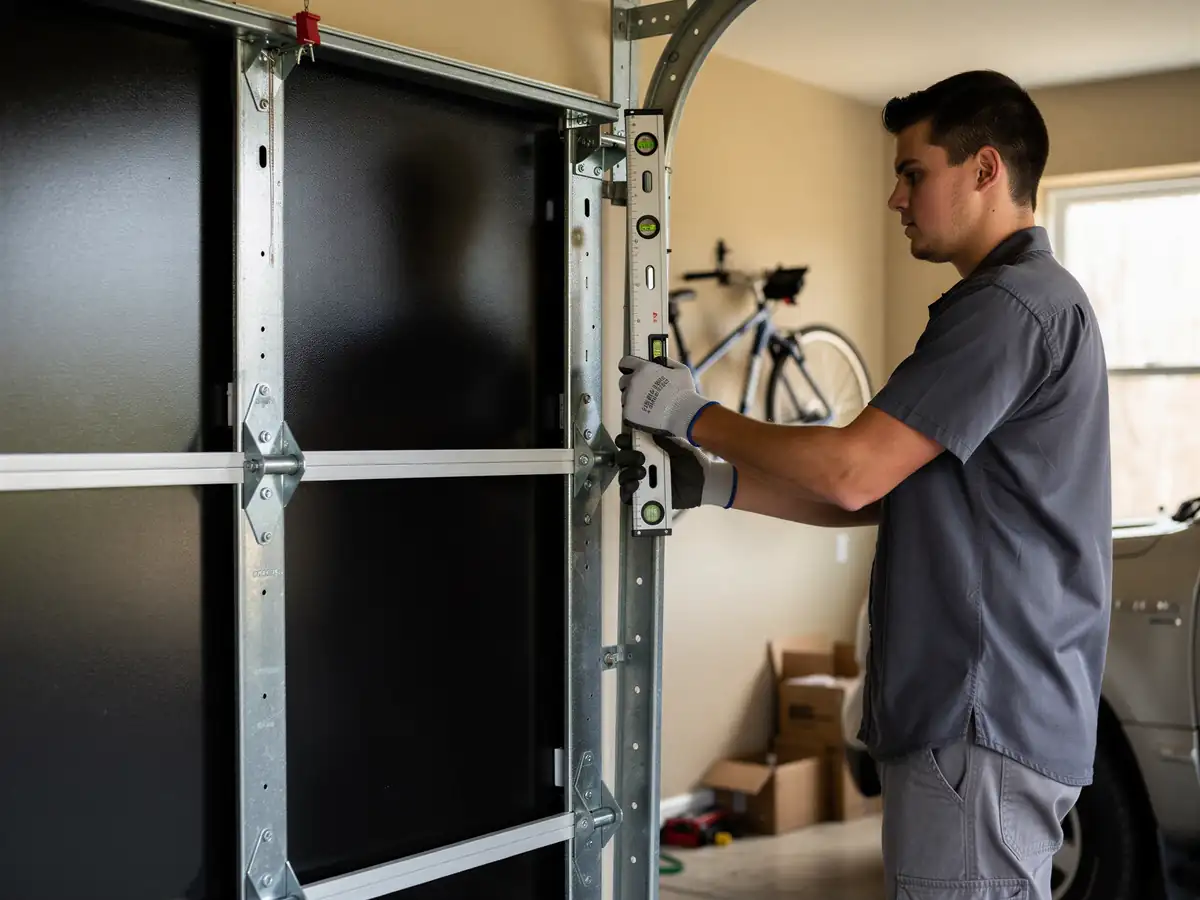
A broken torsion spring is not one of those jobs. These springs store enough tension to cause serious injury, and setting them requires winding bars and a feel for the job that isn't something to learn on your own garage. Same goes for a cable off the drum or a door that's come off its tracks under load - the door is heavy, it's unbalanced, and it can drop. If you're looking at a stuck door, a bent track, or any spring that's already let go, that's a call, not a weekend project.