How It Shows Up
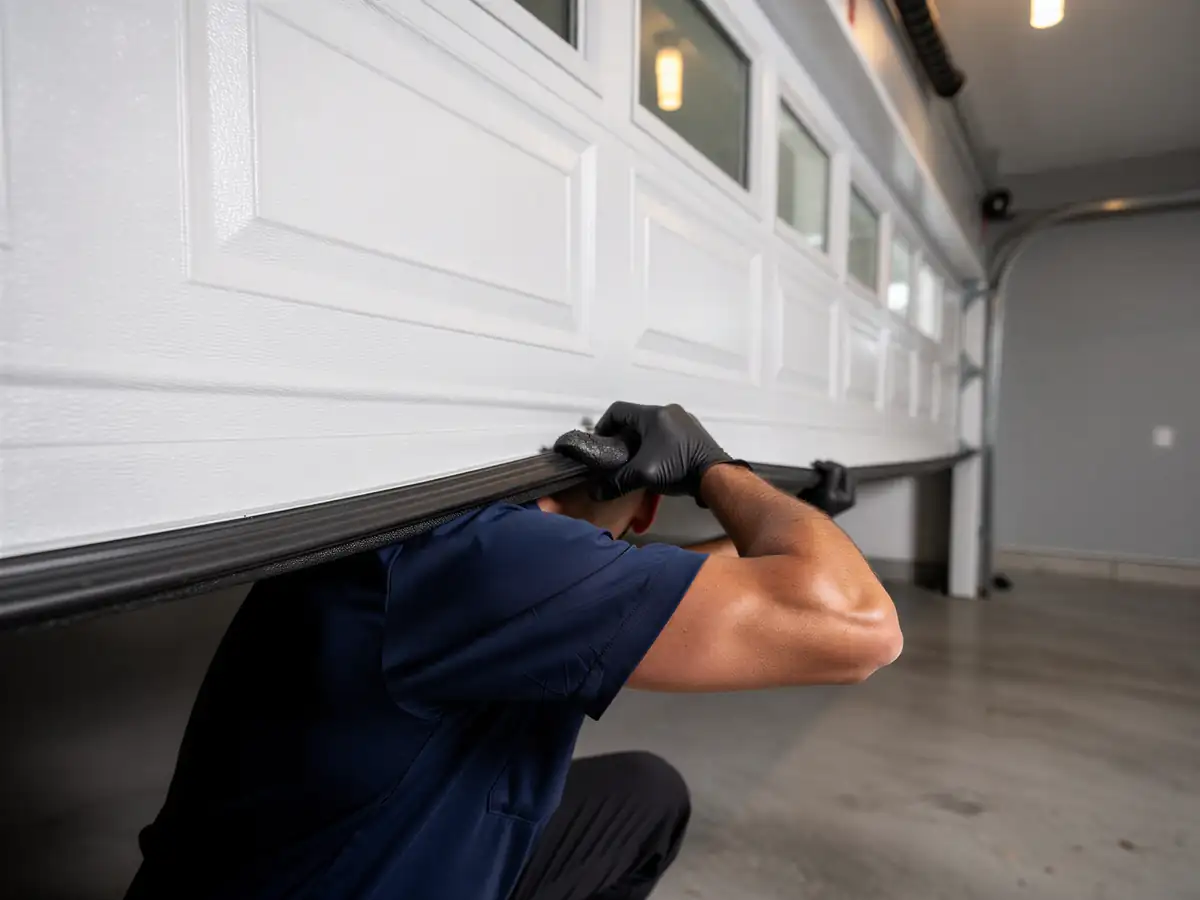
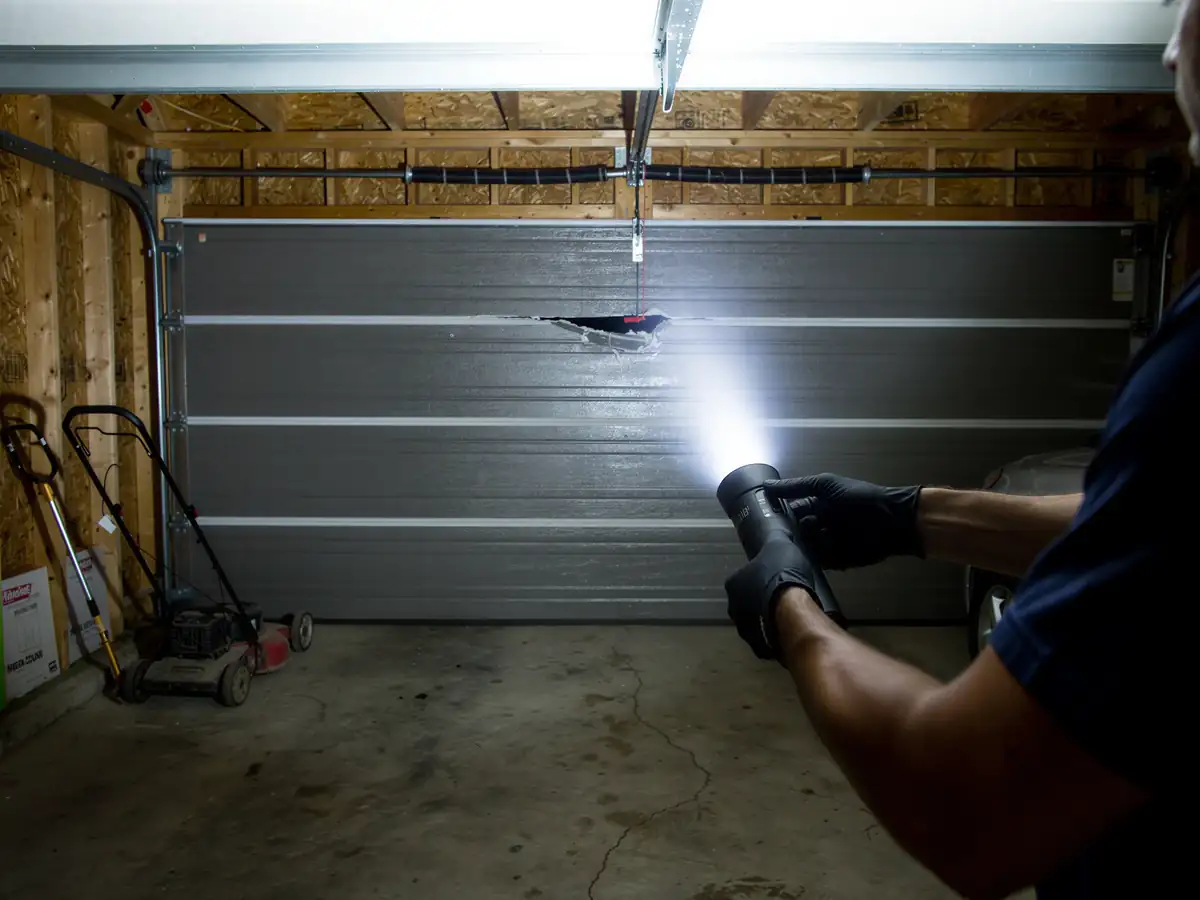
A garage door cable rarely just snaps on its own without warning. What usually happens first is one side of the door starts to hang lower than the other, or the door tips at an angle when it's halfway up. Sometimes you'll hear a loud bang as the cable jumps off the drum and the door drops hard on one side. Other times a strand frays slowly at the bottom bracket and you notice it before it fully lets go - a few broken wires sticking out like a bent paperclip.
If the door won't open at all and one cable is visibly off the drum or coiled on the floor, that's the clearest sign. Don't try to force the opener through it. The cable is under spring tension even when the door looks still, and a cable that's partially failed can finish failing while someone's hand or foot is near the track.
In homes across Menifee, we see this most on doors where the cable has been carrying uneven load for months before anyone notices - one side binding slightly, rollers dragging, the opener straining to compensate. By the time it shows up as a visible problem, the cable's usually been working harder than it should for a while.
Why It Happens Here
Most of the housing stock in this service area went up between 1974 and 2009
With the bulk of it dating to the 1980s and 90s across the two dozen-plus named communities we work in. Doors and hardware installed during that build-out are now thirty-plus years into service in a lot of cases, and galvanized cables don't last forever - they fatigue at the drum and at the bottom roller bracket from repeated flexing, and that fatigue speeds up with heat cycling.
That's the other half of it
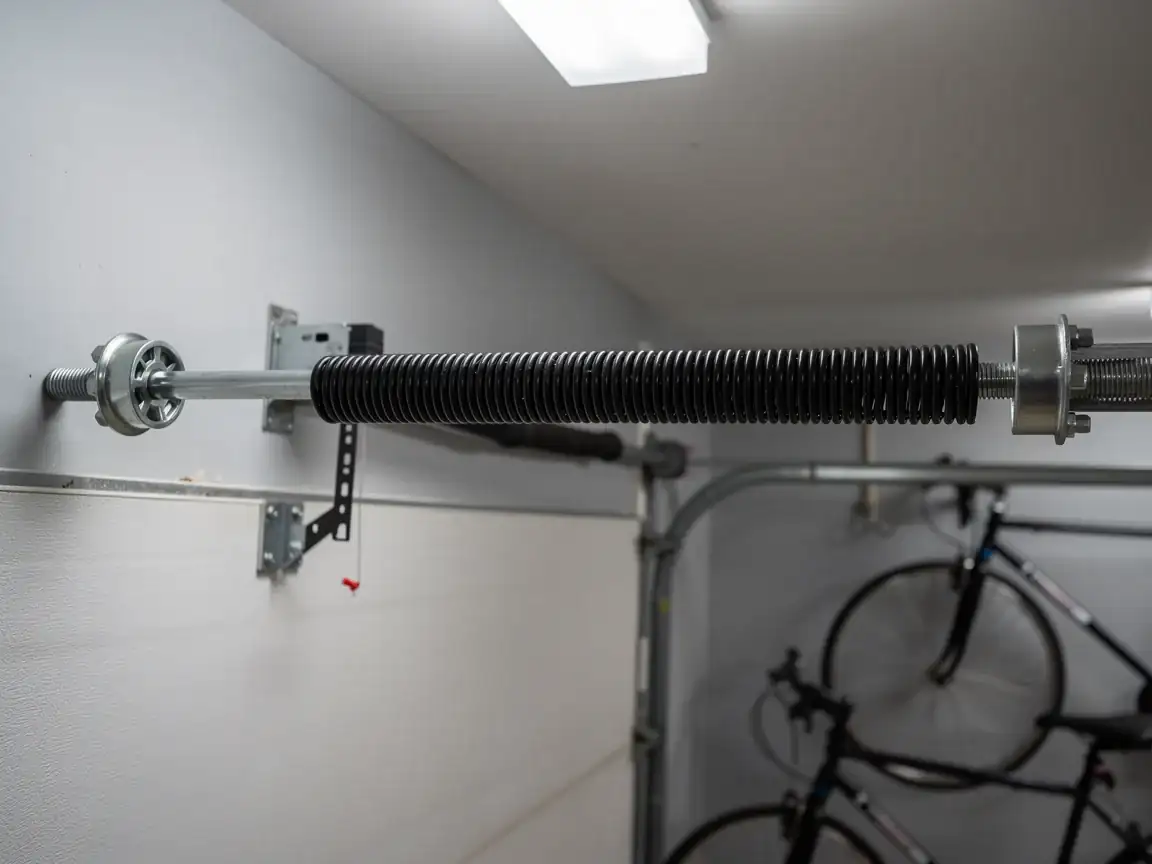
This area sits in a severe heat climate band, and garage interiors here run hotter than the outside air for a good part of the year. Steel cable expands and contracts with that heat, and the bottom bracket attachment point takes the brunt of it every time the door cycles. Add in a cheaper stamped pulley or a roller that's started to seize, and the cable starts riding wrong on the drum - that's when you get the fraying instead of a clean failure.
We also see cable wear tied to springs that were never upsized when a door got heavier insulation added later
Which shifts more load onto the cable than the original setup called for.
The Cost of This Job
A cable repair is one of the more straightforward jobs on a garage door, but what it actually costs depends on what we find once the door's open. A clean cable replacement on both sides, done while we're already in there, is a different job than a cable that's torn up the drum or bent the bottom bracket on its way out - that adds parts and labor.
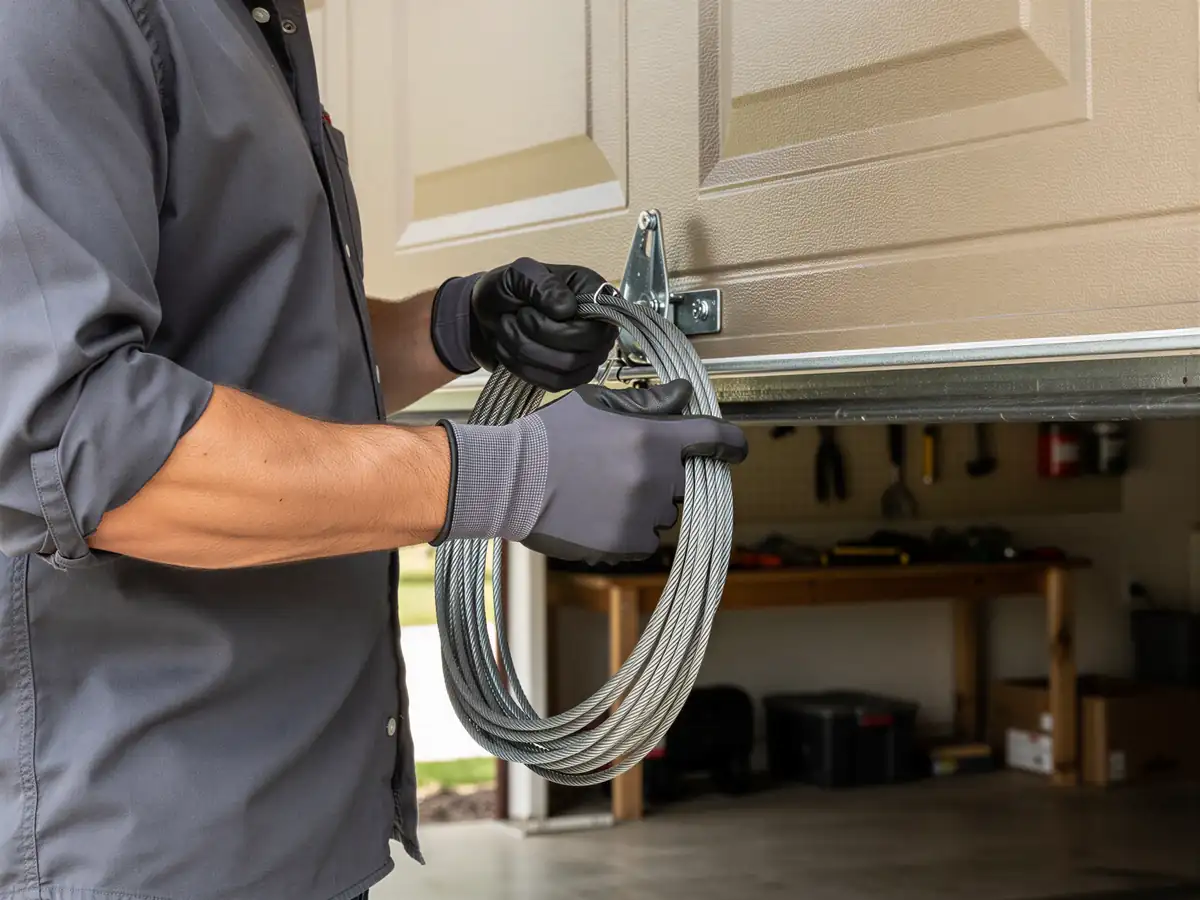
We don't publish a flat number for this because the honest answer is "it depends on the drum, the bracket, and whether the spring took damage when the cable let go." What we can tell you is that replacing both cables together, even if only one failed, is usually worth doing - the other one is the same age and under the same load, and a second callback for the matching failure a few months later costs more than doing it once.
We'll give you a real number after we look at the door, not before.
Doing It Yourself
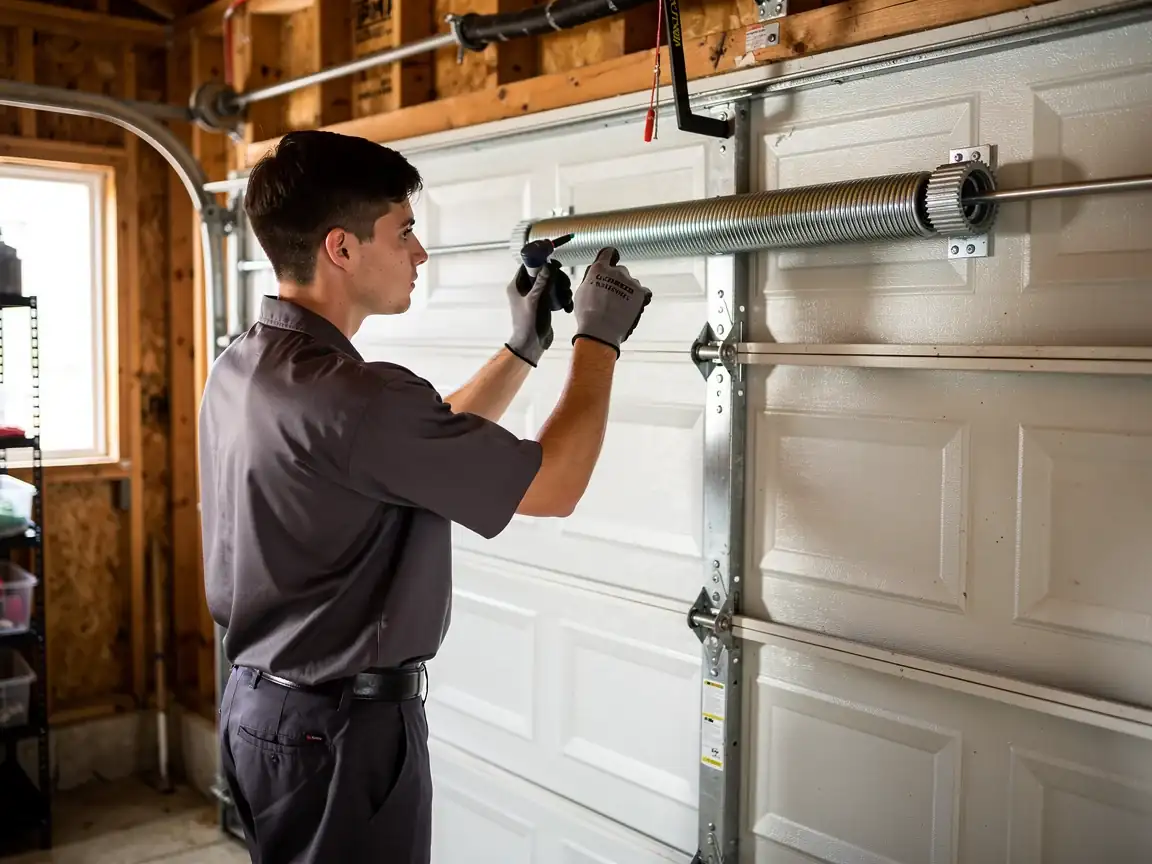
We'll be straight with you: this is not a job to do yourself. A garage door cable is attached to a system under spring tension strong enough to lift a few hundred pounds, and a cable that's already frayed or off the drum means that tension isn't being held the way it should be. People get hurt on this one - fingers near the drum, a door that drops without warning, a spring that lets go while someone's got a wrench on it.
If you're handy and want to do something safe in the meantime, you can visually check the other cable and both rollers without touching anything under tension, and you can keep the door closed and the opener unplugged so nobody tries to run it. That's about where DIY should stop on this one.
If the door is stuck in an odd position or one side is sagging, leave it where it is and call. Trying to muscle it level yourself is how a manageable repair turns into a bigger one.