Doing It Yourself
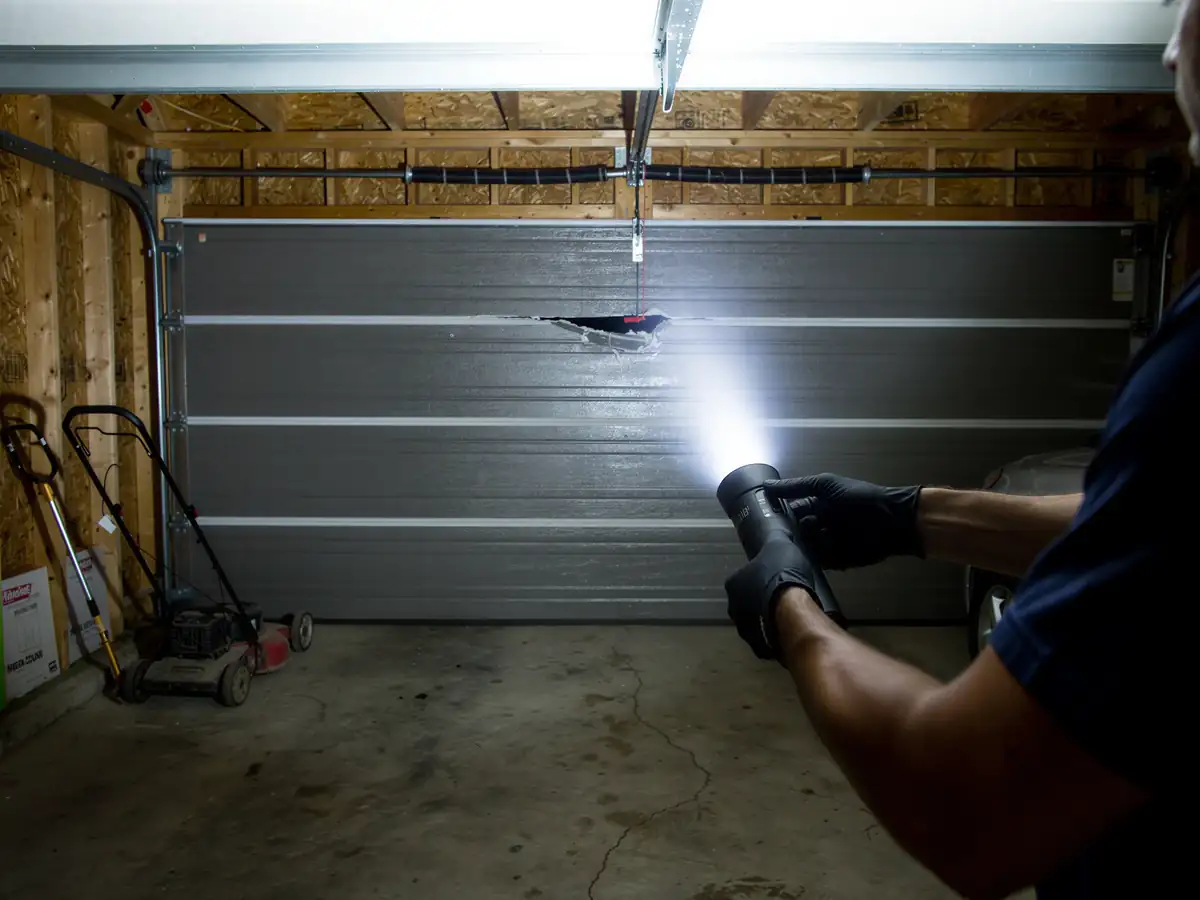
A frayed cable is not a weekend project, and I'll say that straight out. The cable is one half of a system holding a 130-plus pound door up against spring tension, and the two sides have to come off and go back on evenly or the door racks sideways in the track. If you can see broken strands at the bottom roller bracket, or the cable has jumped off the drum, that's a sign the wire is at the end of its life, not a spot to wind it back on and hope.
Most houses in Winchester went up in the late 1980s, and that era used galvanized aluminized steel cable on cable drums rather than the cheaper stamped pulleys some older tracts got. It's decent wire, but thirty-plus years of sun and dust take the galvanizing down to bare metal at the drum groove, and that's where it parts. What you can safely do yourself: pull the emergency release, prop the door with a clamp above the bottom roller so it can't fall, and leave the spring and cable alone until someone pulls the tension safely. That's the honest limit of a DIY fix here.
What Is on the Truck
For a standard torsion setup from this era
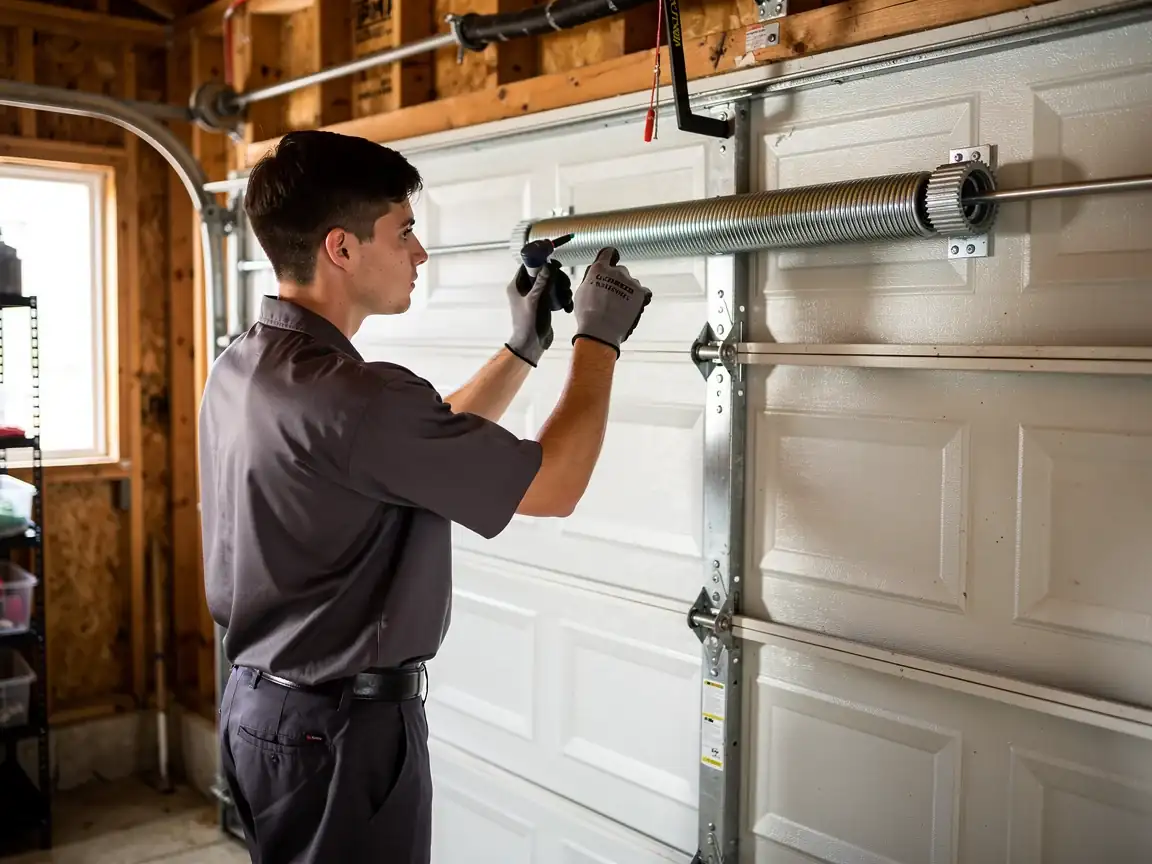
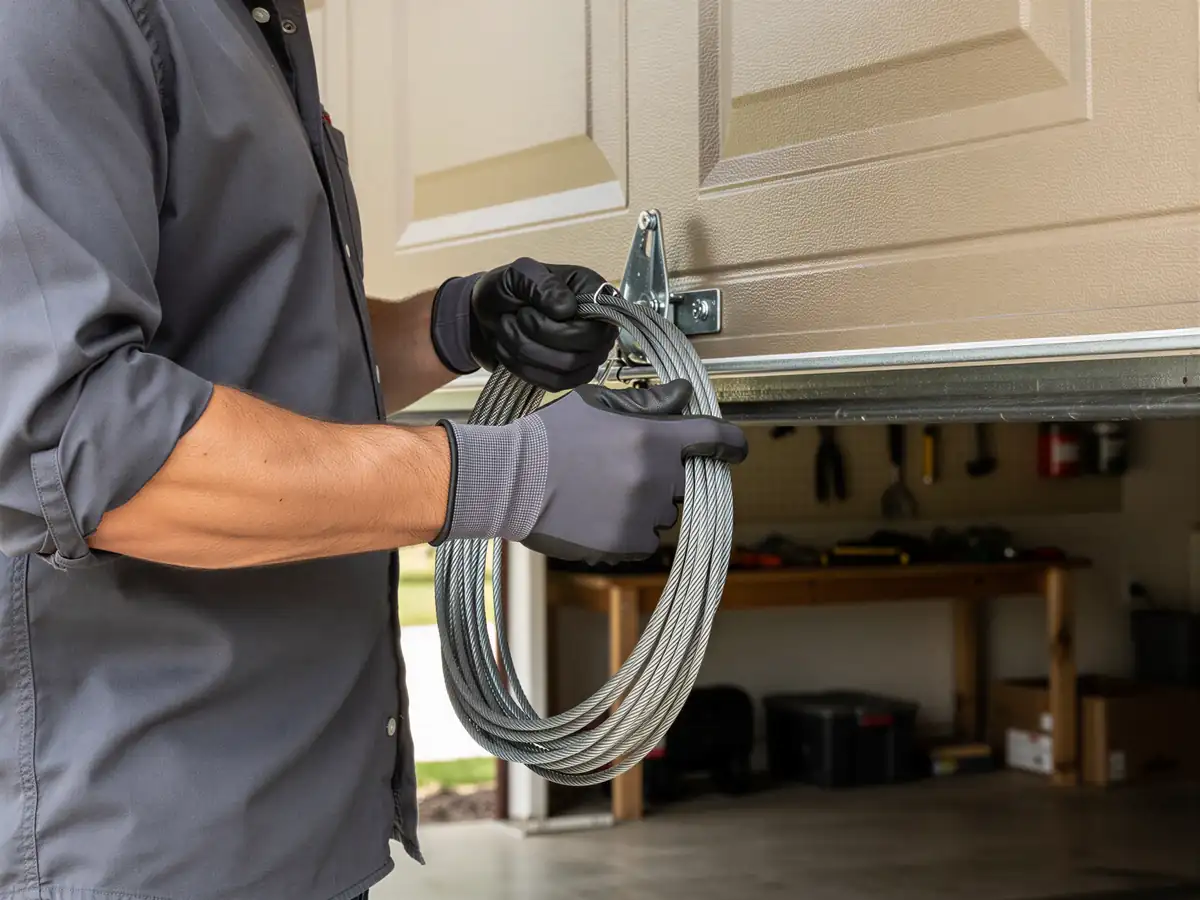
The job usually means replacing both cables as a pair even if only one failed - the other side is the same age and under the same load, and a mismatched pair is how you get a second call three months later. The truck carries 1/8-inch and 7x19 galvanized aircraft cable in the lengths that fit a 7-foot and 8-foot door, stop fittings, and the clips for stamped-drum setups where the loop end differs from a standard torsion drum.
On doors from the 1988 stock that are still running the original hardware
The drums themselves sometimes need to come off too - grooves wear a channel over three decades and a new cable on a worn drum just frays again. We carry standard drum sizes for that, but we don't carry every obsolete bracket pattern, which is the one honest gap: a handful of original builder-grade openers and tracks from this era use parts nobody reproduces, and on those the call becomes a conversation about replacing the section rather than chasing a part.
The Cost of This Job
A cable repair on its own, done as a pair replacement, costs less than most people brace for - it's the labor of a correctly tensioned spring release and re-wind that takes the time, not the wire itself. What changes the number is what the cable damage took with it: a snapped cable under load can drop a door hard enough to bend the bottom bracket or crack a panel, and at that point you're pricing a bracket or a panel section alongside the cable.
Winchester's median household income sits at $75,353, a bit under the wider service area's $84,369, and that's not a reason to put off a cable job - a cable that's already shedding strands doesn't get cheaper to fix by waiting, it gets more likely to take a panel or a track with it when it finally lets go.
Getting It Booked In
We run this job out of Menifee, about 6 miles from Winchester, so there's no local branch or depot to mention - just a truck that comes out stocked for the cable work this area's housing stock actually needs. If you're not sure whether what you're looking at is a cable problem or something else on the door, the cable repair page for Menifee covers the general signs, and the Winchester service area page has what we cover out this way.
When you call, tell us the door's rough age if you know it and whether the cable came off the drum or snapped outright - that tells us which parts to load before we drive out, rather than finding out standing in the driveway.
Why It Happens Here
The straightforward reason cables fail on this side of the service area
Most of Winchester's homes were built around 1988, squarely in the middle of the service area's 1974-2009 build window, and that means thirty-plus-year-old galvanized cable that's lived its whole life under a severe heat load. The service area sits in a HEAT-severe climate band, and heat cycling is hard on cable in a specific way - the metal expands and contracts against the drum groove every summer afternoon, and the zinc coating wears thin at exactly the point where the cable bends tightest.
With 1,052 households in Winchester itself
Most sharing that same build-year window, the pattern repeats door to door: original cable, same drum wear pattern, same age-related fatigue. It's not a workmanship issue or a bad batch - it's three decades of heat and tension on hardware nobody's touched since the house was built.
- 1,052 households