How It Shows Up
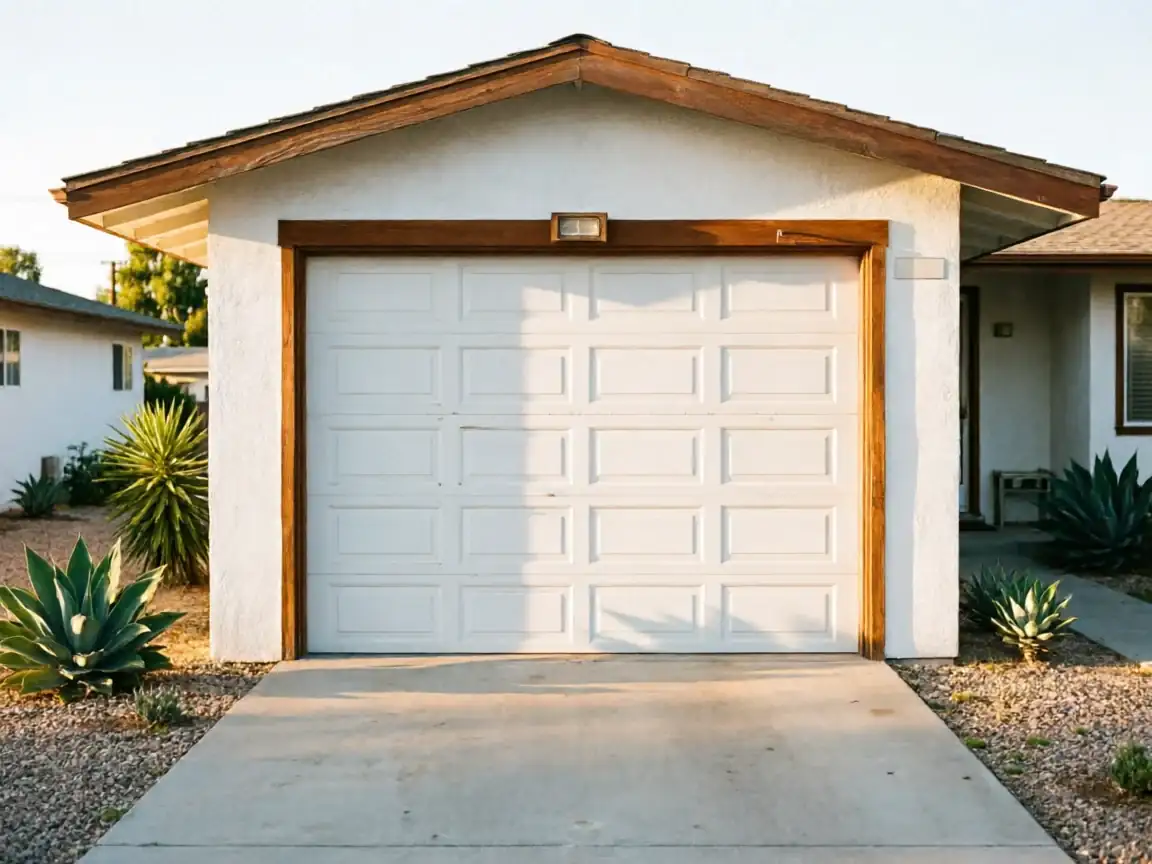
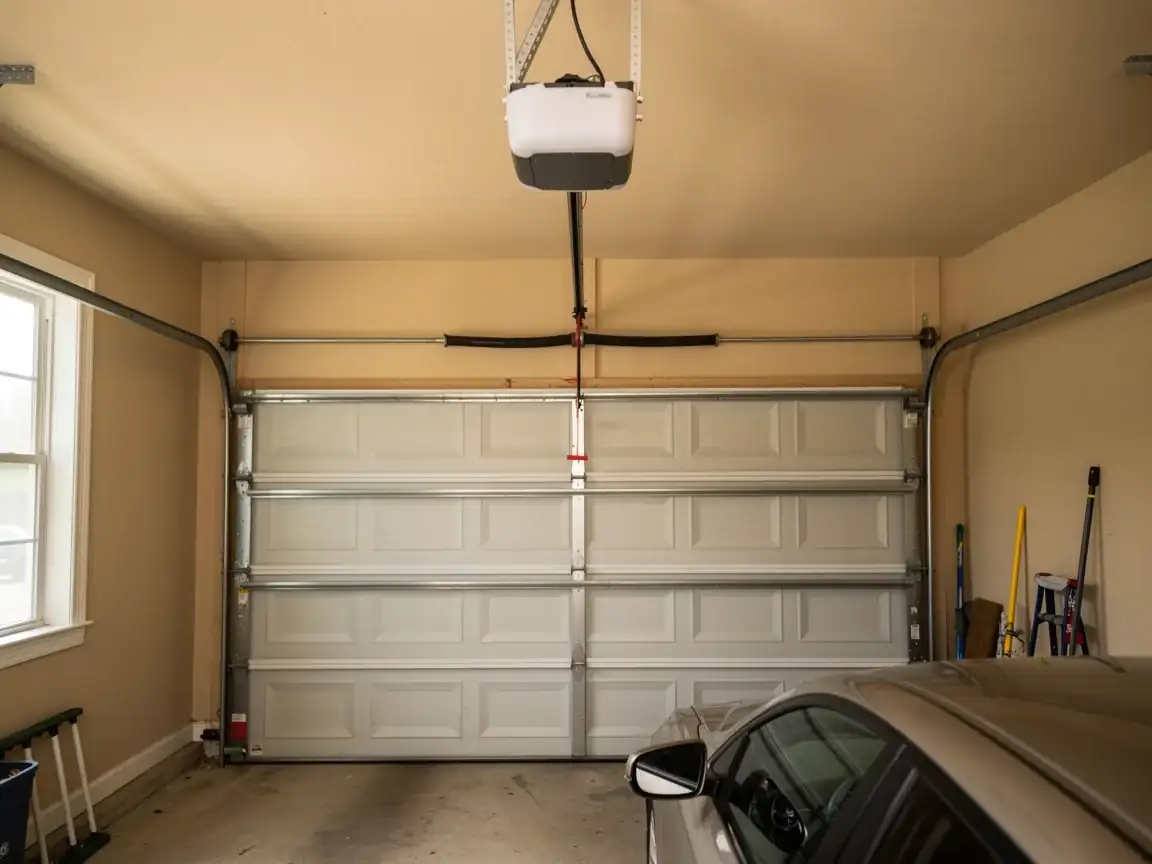
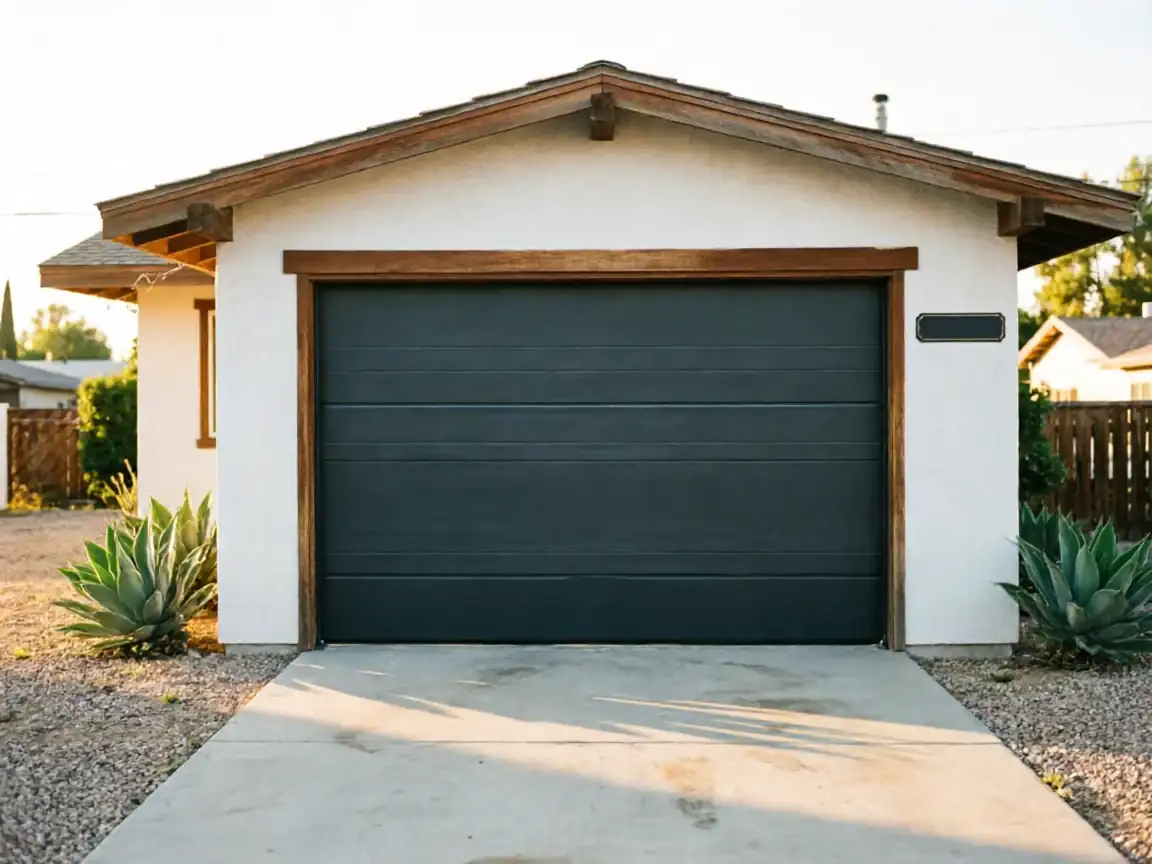
Most garage doors in Perris went up around 1999, the median year of construction for houses in this part of the service area. That means steel sectional doors on standard torsion hardware, mounted over a single horizontal bar rather than the newer side-mount springs you'll find on houses built in the 2000s and later. Panels from that era are usually non-insulated or lightly insulated steel, not the thicker foam-core doors sold today.
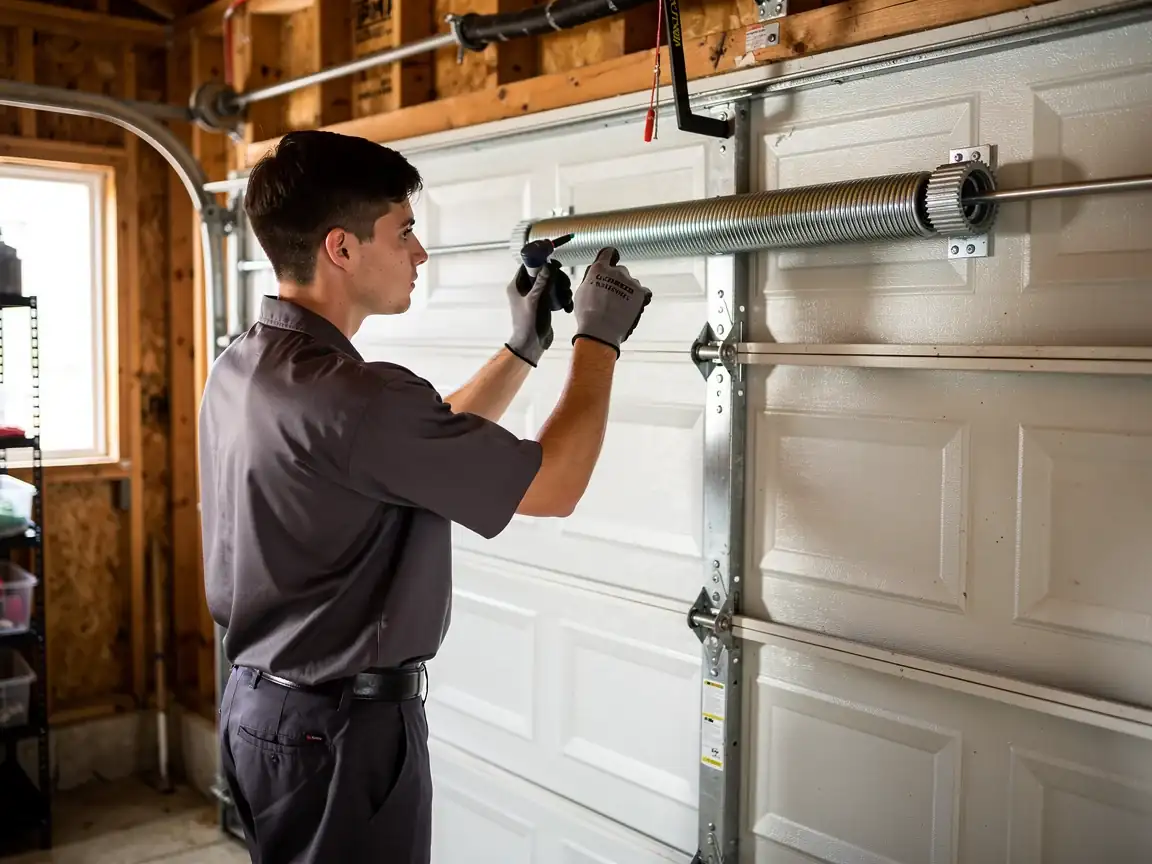
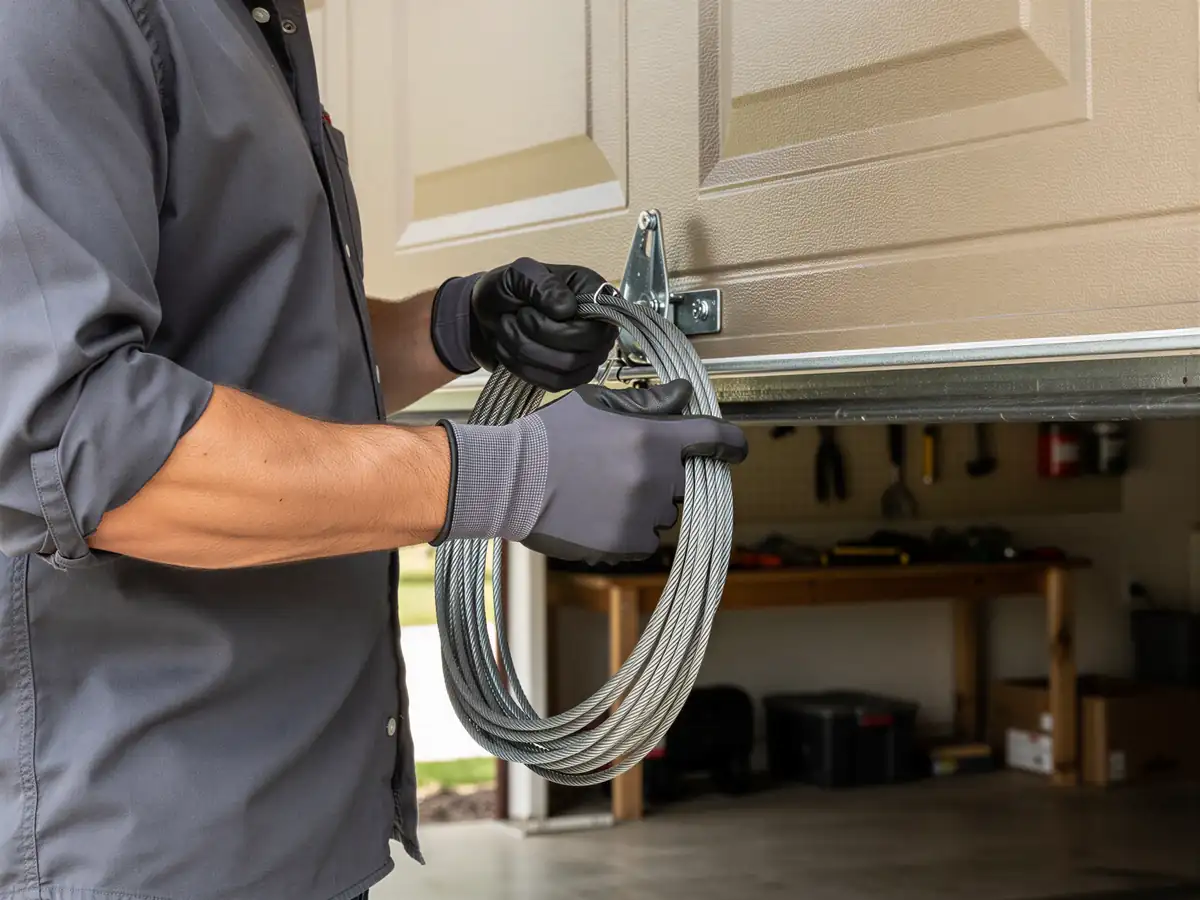
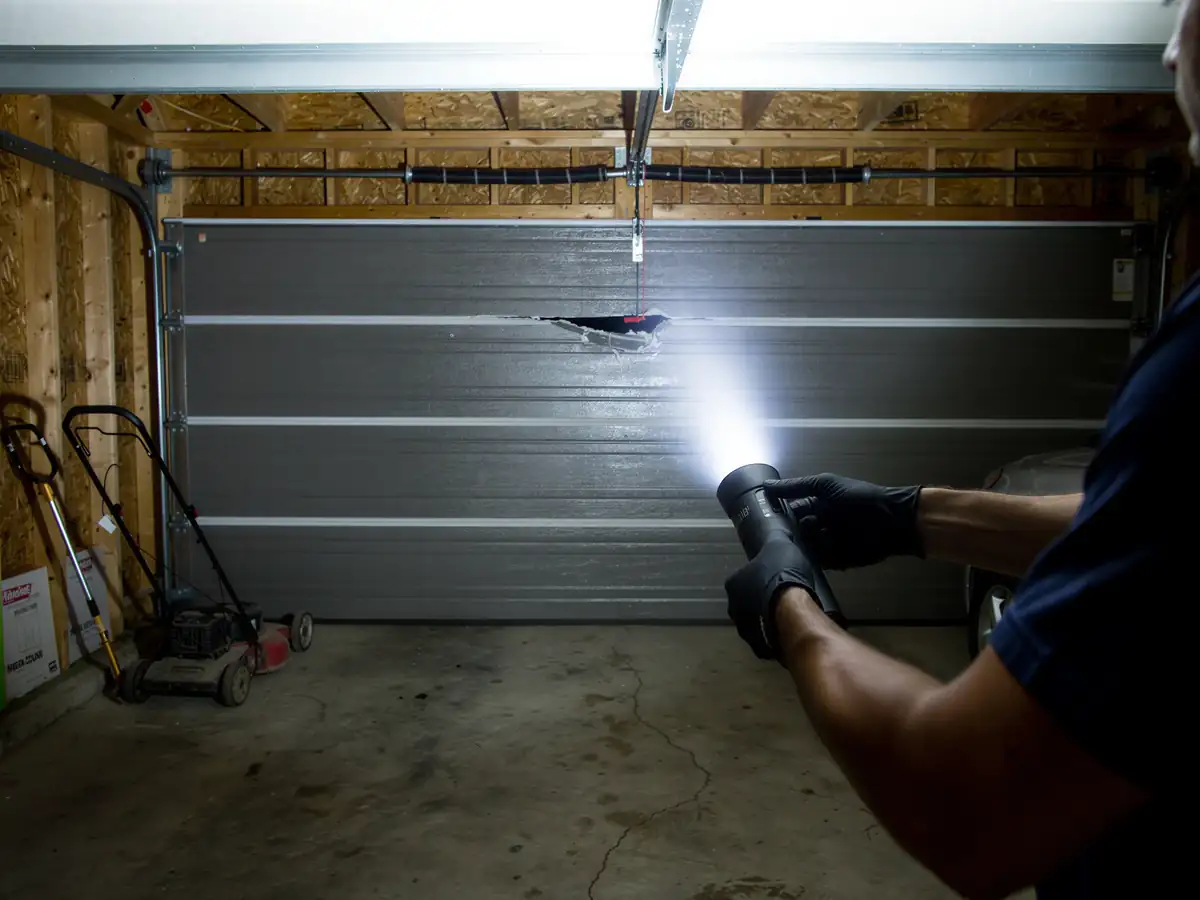
At roughly twenty-five years old, the fault pattern is predictable. The door starts dropping unevenly when the opener runs, or it shudders partway up and stalls. Sometimes it's the cable fraying where it wraps the drum. Sometimes the whole door feels heavier than it used to, which usually means the spring has lost tension and the opener motor is doing work it was never built to carry alone. None of this shows up overnight - it's two and a half decades of cycles catching up with original hardware that was never swapped out.
On a street of houses built in the same two or three years, these failures tend to cluster. If your neighbor's spring went last summer, yours is on a similar clock.
What Can Go Wrong
Torsion springs from the late '90s were rated for a standard cycle count
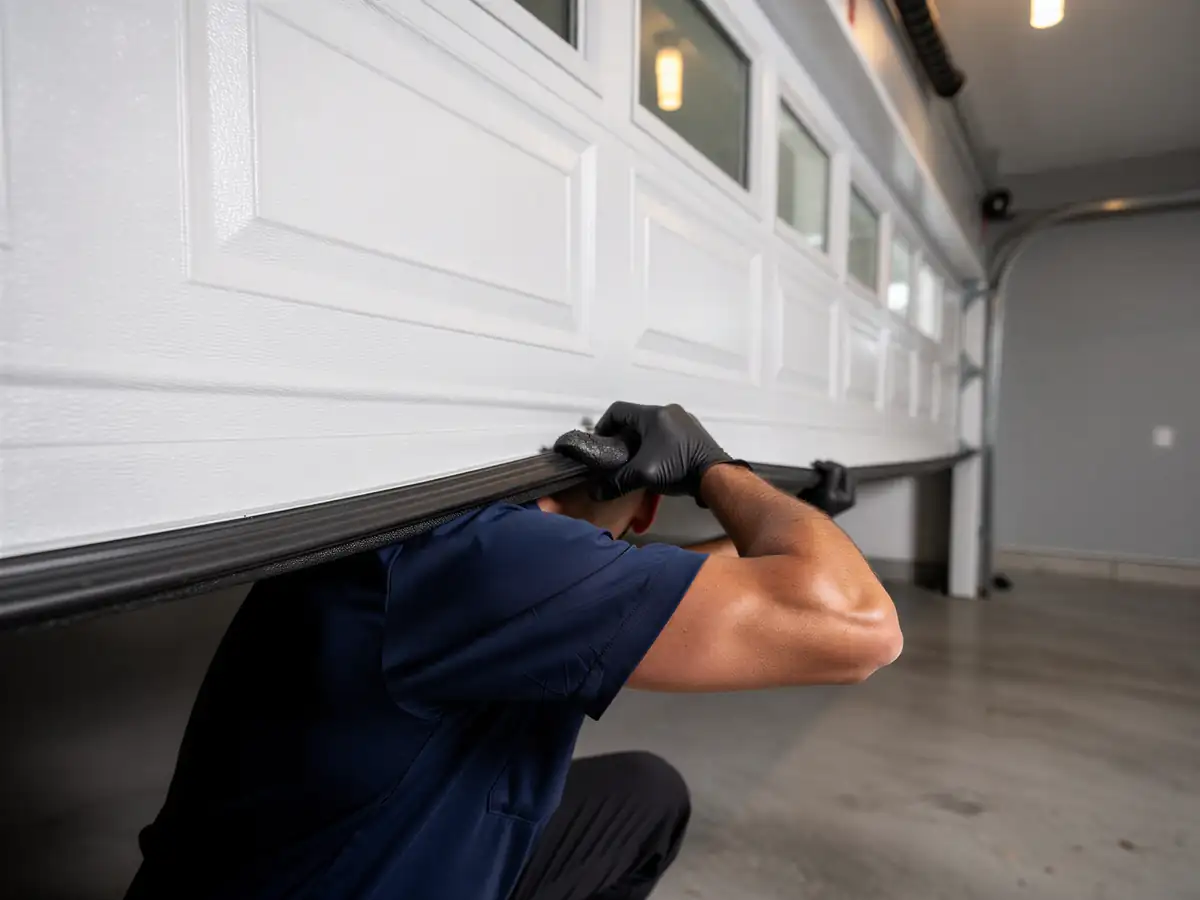
And most have long since passed it even if nobody noticed. A spring that snaps usually does it loudly, with the door stuck down and the cable gone slack on one side. Less dramatic but just as common: a stripped nylon gear inside the opener, worn rollers rattling in the track, or a bottom bracket pulling loose from a panel that's been flexed one too many times.
Heat matters here
Severe summer heat warps thin steel panels over the years and dries out lubricant on tracks and hinges faster than it would in a milder climate, which speeds up wear on hardware that's already a couple of decades old. A door that binds only in the afternoon, once the metal has expanded, is a heat-and-age problem together, not one or the other.
We don't try to rebuild a door frame that's been pulled out of square or weld a cracked panel seam
At that point the labor costs more than new steel, and we'll say so instead of running up a bill on a door that's not worth saving.
The Cost of This Job
We don't post a flat number here because the job varies by what's actually failed - a single torsion spring is a different job than a full opener swap or a track realignment after a bent roller. What we can tell you is how the decision usually goes for Perris homeowners: a 1999-era door with original hardware is usually worth repairing if it's the spring, cable, or rollers, since the steel panels themselves tend to hold up fine. It's a different conversation if the opener's circuit board has failed, since parts for a twenty-five-year-old opener aren't always sitting on a shelf anywhere.
At a median household income of $82,523 for this part of the service area, most homeowners we talk to want a straight answer on repair versus replace before we touch anything, not a surprise add-on halfway through. We give that number on-site, after we've actually opened the housing or pulled the spring off the bar, because quoting blind on a door we haven't seen is how people get overcharged.
How Long You Are Without the Door
We run out of Menifee, about 7 miles from Perris, so we're not promising a same-hour arrival - we schedule the job and tell you honestly where you land on the day's route. For most spring and cable repairs, once we're on-site the door is back working the same visit; those are bar stock parts we carry regardless of the job.
Where it stretches out is parts specific to older openers. If the board or the motor on a late-'90s unit has actually failed rather than just needing a reset, finding an exact replacement part can take longer than the repair itself, and sometimes it's faster and cheaper to replace the opener outright than wait on a part for a unit that age. We'll tell you which situation you're in before we order anything, not after.
In the meantime, a door stuck down is a security problem as much as an inconvenience, and we'll walk you through a safe manual workaround if you need the garage usable before we can get back out.
What Is on the Truck
We carry standard torsion springs sized for the double and single door openings common on houses built through the '80s and '90s, along with rollers, cables, and the hardware that typically fails on hinges and bottom brackets from that era
That covers most of what we see on a 1999-built door in this area without a special order.
What we don't stock is every opener board variant from every manufacturer that sold units in the late '90s
Some of those parts are discontinued outright, and in that case the honest move is usually a new opener rather than hunting for a part that may not exist anymore. We'll have that conversation on-site rather than guess over the phone.
For anything oversized or custom
A door wider than the standard double opening, or a panel style that was never common stock - we may need to order material, and we'll say so up front rather than show up without it.
Getting It Booked In
If your Perris garage door is sticking, dropping unevenly, or the spring's already gone, tell us what you're seeing and roughly how old the door is - that's usually enough for us to guess the likely cause before the truck even leaves Menifee. See our Perris service area page for how we cover this part of town, or look at the full rundown of garage door service out of Menifee if you want the broader picture of what we handle.
We'll ask a few questions on the call - year the door was installed if you know it, whether it's making noise or just moving slow, whether the opener light still comes on - and that tells us whether to bring a spring kit or expect an opener job. Either way, we're coming from 7 miles out, so getting the details right on the first call saves a second trip for a part we could have brought the first time.